Multi agent DDPG algorithm written in Python + Pytorch

Overview

Project 3: Collaboration and Competition

Project Details

For this project, you will work with the Tennis environment.

Trained Agent

In this environment, two agents control rackets to bounce a ball over a net. If an agent hits the ball over the net, it receives a reward of +0.1. If an agent lets a ball hit the ground or hits the ball out of bounds, it receives a reward of -0.01. Thus, the goal of each agent is to keep the ball in play.

The observation space consists of 8 variables corresponding to the position and velocity of the ball and racket. Each agent receives its own, local observation. Two continuous actions are available, corresponding to movement toward (or away from) the net, and jumping.

The task is episodic, and in order to solve the environment, your agents must get an average score of +0.5 (over 100 consecutive episodes, after taking the maximum over both agents). Specifically,

  • After each episode, we add up the rewards that each agent received (without discounting), to get a score for each agent. This yields 2 (potentially different) scores. We then take the maximum of these 2 scores.
  • This yields a single score for each episode.

The environment is considered solved, when the average (over 100 episodes) of those scores is at least +0.5.

Getting Started

Dependencies

To set up your python environment to run the code in the notebook, follow the instructions below.

  1. Create (and activate) a new environment with Python 3.6.

    • Linux or Mac:
    conda create --name drlnd python=3.6
    source activate drlnd
    • Windows:
    conda create --name drlnd python=3.6 
    activate drlnd
  2. Clone the repository, and navigate to the python/ folder. Then, install several dependencies.

git clone https://github.com/udacity/deep-reinforcement-learning.git
cd deep-reinforcement-learning/python
pip install .

Note: You may encounter issues with installing Pytorch 0.4.0. In that case, please replace the file python/requirements.txt with the file requirements.txt inside this project.

  1. Create an IPython kernel for the drlnd environment.
python -m ipykernel install --user --name drlnd --display-name "drlnd"
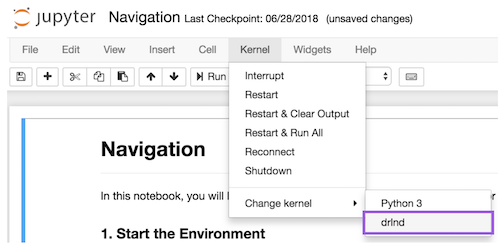
  1. Before running code in a notebook, change the kernel to match the drlnd environment by using the drop-down Kernel menu.

Kernel

Instructions

  1. Download the environment from one of the links below. You need only select the environment that matches your operating system:

    (For Windows users) Check out this link if you need help with determining if your computer is running a 32-bit version or 64-bit version of the Windows operating system.

    (For AWS) If you'd like to train the agent on AWS (and have not enabled a virtual screen), then please use this link to obtain the "headless" version of the environment. You will not be able to watch the agent without enabling a virtual screen, but you will be able to train the agent. (To watch the agent, you should follow the instructions to enable a virtual screen, and then download the environment for the Linux operating system above.)

  2. Place the extracted files in the same folder as the notebook Tennis.ipynb.

  3. Load the notebook with Jupyter notebook. (The command to start Jupyter notebook is jupyter notebook)

  4. Follow further instructions in the notebook.

You might also like...
Implementation of EMNLP 2017 Paper
Implementation of EMNLP 2017 Paper "Natural Language Does Not Emerge 'Naturally' in Multi-Agent Dialog" using PyTorch and ParlAI

Language Emergence in Multi Agent Dialog Code for the Paper Natural Language Does Not Emerge 'Naturally' in Multi-Agent Dialog Satwik Kottur, José M.

Implementation of EMNLP 2017 Paper
Implementation of EMNLP 2017 Paper "Natural Language Does Not Emerge 'Naturally' in Multi-Agent Dialog" using PyTorch and ParlAI

Language Emergence in Multi Agent Dialog Code for the Paper Natural Language Does Not Emerge 'Naturally' in Multi-Agent Dialog Satwik Kottur, José M.

Pytorch modules for paralel models with same architecture. Ideal for multi agent-based systems

WideLinears Pytorch parallel Neural Networks A package of pytorch modules for fast paralellization of separate deep neural networks. Ideal for agent-b

A lightweight Python-based 3D network multi-agent simulator. Uses a cell-based congestion model. Calculates risk, loudness and battery capacities of the agents. Suitable for 3D network optimization tasks.

AMAZ3DSim AMAZ3DSim is a lightweight python-based 3D network multi-agent simulator. It uses a cell-based congestion model. It calculates risk, battery

Spatial Intention Maps for Multi-Agent Mobile Manipulation (ICRA 2021)

spatial-intention-maps This code release accompanies the following paper: Spatial Intention Maps for Multi-Agent Mobile Manipulation Jimmy Wu, Xingyua

Rethinking the Importance of Implementation Tricks in Multi-Agent Reinforcement Learning

RIIT Our open-source code for RIIT: Rethinking the Importance of Implementation Tricks in Multi-AgentReinforcement Learning. We implement and standard

Official source code to CVPR'20 paper,
Official source code to CVPR'20 paper, "When2com: Multi-Agent Perception via Communication Graph Grouping"

When2com: Multi-Agent Perception via Communication Graph Grouping This is the PyTorch implementation of our paper: When2com: Multi-Agent Perception vi

Multi Agent Path Finding Algorithms

MATP-solver Simulator collision check path step random initial states or given states Traditional method Seperate A* algorithem Confict-based Search S

A parallel framework for population-based multi-agent reinforcement learning.

MALib: A parallel framework for population-based multi-agent reinforcement learning MALib is a parallel framework of population-based learning nested

Releases(v1.0.0)
Owner
Rogier Wachters
Rogier Wachters
ActNN: Reducing Training Memory Footprint via 2-Bit Activation Compressed Training

ActNN : Activation Compressed Training This is the official project repository for ActNN: Reducing Training Memory Footprint via 2-Bit Activation Comp

UC Berkeley RISE 178 Jan 05, 2023
Source code for deep symbolic optimization.

Update July 10, 2021: This repository now supports an additional symbolic optimization task: learning symbolic policies for reinforcement learning. Th

Brenden Petersen 290 Dec 25, 2022
Tesla Light Show xLights Guide With python

Tesla Light Show xLights Guide Welcome to the Tesla Light Show xLights guide! You can create and run your own light shows on Tesla vehicles. Running a

Tesla, Inc. 2.5k Dec 29, 2022
Implementation of TransGanFormer, an all-attention GAN that combines the finding from the recent GanFormer and TransGan paper

TransGanFormer (wip) Implementation of TransGanFormer, an all-attention GAN that combines the finding from the recent GansFormer and TransGan paper. I

Phil Wang 146 Dec 06, 2022
Self-labelling via simultaneous clustering and representation learning. (ICLR 2020)

Self-labelling via simultaneous clustering and representation learning 🆗 🆗 🎉 NEW models (20th August 2020): Added standard SeLa pretrained torchvis

Yuki M. Asano 469 Jan 02, 2023
StellarGraph - Machine Learning on Graphs

StellarGraph Machine Learning Library StellarGraph is a Python library for machine learning on graphs and networks. Table of Contents Introduction Get

S T E L L A R 2.6k Jan 05, 2023
Select, weight and analyze complex sample data

Sample Analytics In large-scale surveys, often complex random mechanisms are used to select samples. Estimates derived from such samples must reflect

samplics 37 Dec 15, 2022
Syllabus del curso IIC2115 - Programación como Herramienta para la Ingeniería 2022/I

IIC2115 - Programación como Herramienta para la Ingeniería Videos y tutoriales Tutorial CMD Tutorial Instalación Python y Jupyter Tutorial de git-GitH

21 Nov 09, 2022
Implementation of our paper 'RESA: Recurrent Feature-Shift Aggregator for Lane Detection' in AAAI2021.

RESA PyTorch implementation of the paper "RESA: Recurrent Feature-Shift Aggregator for Lane Detection". Our paper has been accepted by AAAI2021. Intro

137 Jan 02, 2023
This repository contains a toolkit for collecting, labeling and tracking object keypoints

This repository contains a toolkit for collecting, labeling and tracking object keypoints. Object keypoints are semantic points in an object's coordinate frame.

ETHZ ASL 13 Dec 12, 2022
A SAT-based sudoku solver

SAT Sudoku solver A SAT-based Sudoku solver made in the context of a small project in the "Logic Problem Solving" class in the first year at the Polyt

Alexandre Malfreyt 5 Apr 15, 2022
Code for classifying international patents based on the text of their titles/abstracts

Patent Classification Goal: To train a machine learning classifier that can automatically classify international patents downloaded from the WIPO webs

Prashanth Rao 1 Nov 08, 2022
Tensorflow implementation of our method: "Triangle Graph Interest Network for Click-through Rate Prediction".

TGIN Tensorflow implementation of our method: "Triangle Graph Interest Network for Click-through Rate Prediction". Files in the folder dataset/ electr

Alibaba 21 Dec 21, 2022
这个开源项目主要是对经典的时间序列预测算法论文进行复现,模型主要参考自GluonTS,框架主要参考自Informer

Time Series Research with Torch 这个开源项目主要是对经典的时间序列预测算法论文进行复现,模型主要参考自GluonTS,框架主要参考自Informer。 建立原因 相较于mxnet和TF,Torch框架中的神经网络层需要提前指定输入维度: # 建立线性层 TensorF

Chi Zhang 85 Dec 29, 2022
CTRMs: Learning to Construct Cooperative Timed Roadmaps for Multi-agent Path Planning in Continuous Spaces

CTRMs: Learning to Construct Cooperative Timed Roadmaps for Multi-agent Path Planning in Continuous Spaces This is a repository for the following pape

17 Oct 13, 2022
Implementation of: "Exploring Randomly Wired Neural Networks for Image Recognition"

RandWireNN Unofficial PyTorch Implementation of: Exploring Randomly Wired Neural Networks for Image Recognition. Results Validation result on Imagenet

Seung-won Park 684 Nov 02, 2022
[CVPR 2021] Few-shot 3D Point Cloud Semantic Segmentation

Few-shot 3D Point Cloud Semantic Segmentation Created by Na Zhao from National University of Singapore Introduction This repository contains the PyTor

117 Dec 27, 2022
Official Implementation of DE-DETR and DELA-DETR in "Towards Data-Efficient Detection Transformers"

DE-DETRs By Wen Wang, Jing Zhang, Yang Cao, Yongliang Shen, and Dacheng Tao This repository is an official implementation of DE-DETR and DELA-DETR in

Wen Wang 61 Dec 12, 2022
This program can detect your face and add an Christams hat on the top of your head

Auto_Christmas This program can detect your face and add a Christmas hat to the top of your head. just run the Auto_Christmas.py, then you can see the

3 Dec 22, 2021
Tensorflow implementation of DeepLabv2

TF-deeplab This is a Tensorflow implementation of DeepLab, compatible with Tensorflow 1.2.1. Currently it supports both training and testing the ResNe

Chenxi Liu 21 Sep 27, 2022