Supporting code for "Autoregressive neural-network wavefunctions for ab initio quantum chemistry".

Overview

naqs-for-quantum-chemistry


Generic badge MIT License


This repository contains the codebase developed for the paper Autoregressive neural-network wavefunctions for ab initio quantum chemistry.


(a) Architecture of a neural autoregressive quantum state (NAQS) (b) Energy surface of N2

TL;DR

Certain parts of the notebooks relating to generating molecular data are currently not working due to updates to the underlying OpenFermion and Psi4 packages (I'll fix it!) - however the experimental results of NAQS can still be reproduced as we also provide pre-generated data in this repository.

If you don't care for now, and you just want to see it running, here are two links to notebooks that will set-up and run on Colab. Just note that Colab will not have enough memory to run experiments on the largest molecules we considered.

  • run_naqs.ipynb Open In Colab: Run individual experiments or batches of experiments, including those to recreate published results.

  • generate_molecular_data_and_baselines.ipynb Open In Colab:

    1. Create the [molecule].hdf5 and [molecule]_qubit_hamiltonian.pkl files required (these are provided for molecules used in the paper in the molecules directory.)
    2. Solve these molecules using various canconical QC methods using Psi4.

Overview

Quantum chemistry with neural networks

A grand challenge of ab-inito quantum chemistry (QC) is to solve the many-body Schrodinger equation describing interaction of heavy nuclei and orbiting electrons. Unfortunatley, this is an extremely (read, NP) hard problem, and so a significant amout of research effort has, and continues, to be directed towards numerical methods in QC. Typically, these methods work by optimising the wavefunction in a basis set of "Slater determinants". (In practice these are anti-symetterised tensor products of single-electron orbitals, but for our purposes let's not worry about the details.) Typically, the number of Slater determinants - and so the complexity of optimisation - grows exponentially with the system size, but recently machine learning (ML) has emerged as a possible tool with which to tackle this seemingly intractable scaling issue.

Translation/disclaimer: we can use ML and it has displayed some promising properties, but right now the SOTA results still belong to the established numerical methods (e.g. coupled-cluster) in practical settings.

Project summary

We follow the approach proposed by Choo et al. to map the exponentially complex system of interacting fermions to an equivilent (and still exponentially large) system of interacting qubits (see their or our paper for details). The advantage being that we can then apply neural network quantum states (NNQS) originally developed for condensed matter physics (CMP) (with distinguishable interacting particles) to the electron structure calculations (with indistinguishable electrons and fermionic anti-symettries).

This project proposes that simply applying techniques from CMP to QC will inevitably fail to take advantage of our significant a priori knowledge of molecular systems. Moreover, the stochastic optimisation of NNQS relies on repeatedly sampling the wavefunction, which can be prohibitively expensive. This project is a sandbox for trialling different NNQS, in particular an ansatz based on autoregressive neural networks that we present in the paper. The major benefits of our approach are that it:

  1. allows for highly efficient sampling, especially of the highly asymmetric wavefunction typical found in QC,
  2. allows for physical priors - such as conservation of electron number, overall spin and possible symettries - to be embedded into the network without sacrificing expressibility.

Getting started

In this repo

notebooks
  • run_naqs.ipynb Open In Colab: Run individual experiments or batches of experiments, including those to recreate published results.

  • generate_molecular_data_and_baselines.ipynb Open In Colab:

    1. Create the [molecule].hdf5 and [molecule]_qubit_hamiltonian.pkl files required (these are provided for molecules used in the paper in the molecules directory.)
    2. Solve these molecules using various canconical QC methods using Psi4.
experiments

Experimental scripts, including those to reproduced published results, for NAQS and Psi4.

molecules

The molecular data required to reproduce published results.

src / src_cpp

Python and cython source code for the main codebase and fast calculations, respectively.

Running experiments

Further details are provided in the run_naqs.ipynb notebook, however the published experiments can be run using the provided batch scripts.

>>> experiments/bash/naqs/batch_train.sh 0 LiH

Here, 0 is the GPU number to use (if one is available, otherwise the CPU will be used by default) and LiH can be replaced by any folder in the molecules directory. Similarly, the experimental ablations can be run using the corresponding bash scripts.

>>> experiments/bash/naqs/batch_train_no_amp_sym.sh 0 LiH
>>> experiments/bash/naqs/batch_train_no_mask.sh 0 LiH
>>> experiments/bash/naqs/batch_train_full_mask.sh 0 LiH

Requirements

The underlying neural networks require PyTorch. The molecular systems are typically handled by OpenFermion with the backend calculations and baselines requiring and Psi4. Note that this code expects OpenFermion 0.11.0 and will need refactoring to work with newer versions. Otherwise, all other required packages - numpy, matplotlib, seaborn if you want pretty plots etc - are standard. However, to be concrete, the linked Colab notebooks will provide an environment in which the code can be run.

Reference

If you find this project or the associated paper useful, it can be cited as below.

@article{barrett2021autoregressive,
  title={Autoregressive neural-network wavefunctions for ab initio quantum chemistry},
  author={Barrett, Thomas D and Malyshev, Aleksei and Lvovsky, AI},
  journal={arXiv preprint arXiv:2109.12606},
  year={2021}
}
You might also like...
TensorFlow code for the neural network presented in the paper:
TensorFlow code for the neural network presented in the paper: "Structural Language Models of Code" (ICML'2020)

SLM: Structural Language Models of Code This is an official implementation of the model described in: "Structural Language Models of Code" [PDF] To ap

Inference code for "StylePeople: A Generative Model of Fullbody Human Avatars" paper. This code is for the part of the paper describing video-based avatars.

NeuralTextures This is repository with inference code for paper "StylePeople: A Generative Model of Fullbody Human Avatars" (CVPR21). This code is for

A code generator from ONNX to PyTorch code

onnx-pytorch Generating pytorch code from ONNX. Currently support onnx==1.9.0 and torch==1.8.1. Installation From PyPI pip install onnx-pytorch From

This is the code for our KILT leaderboard submission to the T-REx and zsRE tasks. It includes code for training a DPR model then continuing training with RAG.

KGI (Knowledge Graph Induction) for slot filling This is the code for our KILT leaderboard submission to the T-REx and zsRE tasks. It includes code fo

Convert Python 3 code to CUDA code.

Py2CUDA Convert python code to CUDA. Usage To convert a python file say named py_file.py to CUDA, run python generate_cuda.py --file py_file.py --arch

Empirical Study of Transformers for Source Code & A Simple Approach for Handling Out-of-Vocabulary Identifiers in Deep Learning for Source Code

Transformers for variable misuse, function naming and code completion tasks The official PyTorch implementation of: Empirical Study of Transformers fo

Reference implementation of code generation projects from Facebook AI Research. General toolkit to apply machine learning to code, from dataset creation to model training and evaluation. Comes with pretrained models.

This repository is a toolkit to do machine learning for programming languages. It implements tokenization, dataset preprocessing, model training and m

Code for the prototype tool in our paper "CoProtector: Protect Open-Source Code against Unauthorized Training Usage with Data Poisoning".

CoProtector Code for the prototype tool in our paper "CoProtector: Protect Open-Source Code against Unauthorized Training Usage with Data Poisoning".

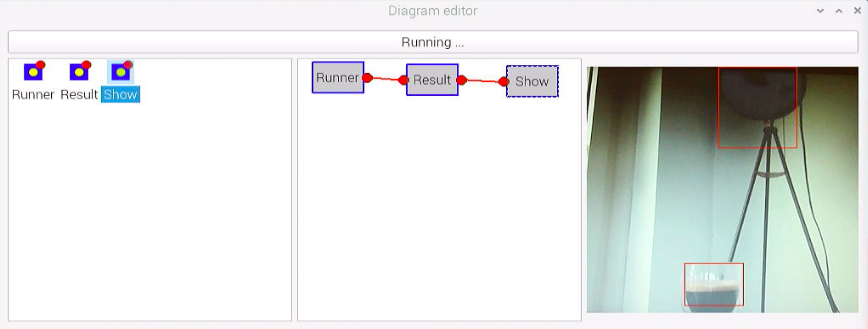
Low-code/No-code approach for deep learning inference on devices

EzEdgeAI A concept project that uses a low-code/no-code approach to implement deep learning inference on devices. It provides a componentized framewor

Comments
  • pip installation

    pip installation

    Great code. It runs very smoothly and clearly outperforms the results in Choo et al. Would you consider re-engineering the code slightly to allow for a pipy installation?

    opened by kastoryano 0
Releases(v1.0.0)
Owner
Tom Barrett
Research Scientist @ InstaDeep, formerly postdoctoral researcher @ Oxford. RL, GNN's, quantum physics, optical computing and the intersection thereof.
Tom Barrett
Repo for code associated with Modeling the Mitral Valve.

Project Title Mitral Valve Getting Started Repo for code associated with Modeling the Mitral Valve. See https://arxiv.org/abs/1902.00018 for preprint,

Alex Kaiser 1 May 17, 2022
PySOT - SenseTime Research platform for single object tracking, implementing algorithms like SiamRPN and SiamMask.

PySOT is a software system designed by SenseTime Video Intelligence Research team. It implements state-of-the-art single object tracking algorit

STVIR 4.1k Dec 29, 2022
Feature board for ERPNext

ERPNext Feature Board Feature board for ERPNext Development Prerequisites k3d kubectl helm bench Install K3d Cluster # export K3D_FIX_CGROUPV2=1 # use

Revant Nandgaonkar 16 Nov 09, 2022
ObjectDetNet is an easy, flexible, open-source object detection framework

Getting started with the ObjectDetNet ObjectDetNet is an easy, flexible, open-source object detection framework which allows you to easily train, resu

5 Aug 25, 2020
PyTorch implementations of Top-N recommendation, collaborative filtering recommenders.

PyTorch implementations of Top-N recommendation, collaborative filtering recommenders.

Yoonki Jeong 129 Dec 22, 2022
Trainable Bilateral Filter Layer (PyTorch)

Trainable Bilateral Filter Layer (PyTorch) This repository contains our GPU-accelerated trainable bilateral filter layer (three spatial and one range

FabianWagner 26 Dec 25, 2022
This repository contains the code to replicate the analysis from the paper "Moving On - Investigating Inventors' Ethnic Origins Using Supervised Learning"

Replication Code for 'Moving On' - Investigating Inventors' Ethnic Origins Using Supervised Learning This repository contains the code to replicate th

Matthias Niggli 0 Jan 04, 2022
Pre-training of Graph Augmented Transformers for Medication Recommendation

G-Bert Pre-training of Graph Augmented Transformers for Medication Recommendation Intro G-Bert combined the power of Graph Neural Networks and BERT (B

101 Dec 27, 2022
Offical code for the paper: "Growing 3D Artefacts and Functional Machines with Neural Cellular Automata" https://arxiv.org/abs/2103.08737

Growing 3D Artefacts and Functional Machines with Neural Cellular Automata Video of more results: https://www.youtube.com/watch?v=-EzztzKoPeo Requirem

Robotics Evolution and Art Lab 51 Jan 01, 2023
Learning Calibrated-Guidance for Object Detection in Aerial Images

Learning Calibrated-Guidance for Object Detection in Aerial Images arxiv We propose a simple yet effective Calibrated-Guidance (CG) scheme to enhance

51 Sep 22, 2022
Deploy optimized transformer based models on Nvidia Triton server

Deploy optimized transformer based models on Nvidia Triton server

Lefebvre Sarrut Services 1.2k Jan 05, 2023
This repository contains the code used in the paper "Prompt-Based Multi-Modal Image Segmentation".

Prompt-Based Multi-Modal Image Segmentation This repository contains the code used in the paper "Prompt-Based Multi-Modal Image Segmentation". The sys

Timo Lüddecke 305 Dec 30, 2022
PINN(s): Physics-Informed Neural Network(s) for von Karman vortex street

PINN(s): Physics-Informed Neural Network(s) for von Karman vortex street This is

ShotaDEGUCHI 2 Apr 18, 2022
Course about deep learning for computer vision and graphics co-developed by YSDA and Skoltech.

Deep Vision and Graphics This repo supplements course "Deep Vision and Graphics" taught at YSDA @fall'21. The course is the successor of "Deep Learnin

Yandex School of Data Analysis 160 Jan 02, 2023
NLP From Scratch Without Large-Scale Pretraining: A Simple and Efficient Framework

NLP From Scratch Without Large-Scale Pretraining This repository contains the code, pre-trained model checkpoints and curated datasets for our paper:

Xingcheng Yao 224 Dec 08, 2022
Analysis code and Latex source of the manuscript describing the conditional permutation test of confounding bias in predictive modelling.

Git repositoty of the manuscript entitled Statistical quantification of confounding bias in predictive modelling by Tamas Spisak The manuscript descri

PNI - Predictive Neuroimaging Lab, University Hospital Essen, Germany 0 Nov 22, 2021
Genetic feature selection module for scikit-learn

sklearn-genetic Genetic feature selection module for scikit-learn Genetic algorithms mimic the process of natural selection to search for optimal valu

Manuel Calzolari 260 Dec 14, 2022
4th place solution to datafactory challenge by Intermarché.

Solution to Datafactory challenge by Intermarché. 4th place solution to datafactory challenge by Intermarché. The objective of the challenge is to pre

Raphael Sourty 11 Mar 19, 2022
This repo is to be freely used by ML devs to check the GAN performances without coding from scratch.

GANs for Fun Created because I can! GOAL The goal of this repo is to be freely used by ML devs to check the GAN performances without coding from scrat

Sagnik Roy 13 Jan 26, 2022
FcaNet: Frequency Channel Attention Networks

FcaNet: Frequency Channel Attention Networks PyTorch implementation of the paper "FcaNet: Frequency Channel Attention Networks". Simplest usage Models

327 Dec 27, 2022