DivNoising is an unsupervised denoising method to generate diverse denoised samples for any noisy input image. This repository contains the code to reproduce the results reported in the paper https://openreview.net/pdf?id=agHLCOBM5jP

Overview

DivNoising: Diversity Denoising with Fully Convolutional Variational Autoencoders

Mangal Prakash1, Alexander Krull1,2, Florian Jug2
1Authors contributed equally, 2Shared last authors.
Max Planck Institute of Molecular Cell Biology and Genetics (MPI-CBG)
Center for Systems Biology (CSBD) in Dresden, Germany .

teaserFigure

Deep Learning based methods have emerged as the indisputable leaders for virtually all image restoration tasks. Especially in the domain of microscopy images, various content-aware image restoration (CARE) approaches are now used to improve the interpretability of acquired data. But there are limitations to what can be restored in corrupted images, and any given method needs to make a sensible compromise between many possible clean signals when predicting a restored image. Here, we propose DivNoising - a denoising approach based on fully-convolutional variational autoencoders, overcoming this problem by predicting a whole distribution of denoised images. Our method is unsupervised, requiring only noisy images and a description of the imaging noise, which can be measured or bootstrapped from noisy data. If desired, consensus predictions can be inferred from a set of DivNoising predictions, leading to competitive results with other unsupervised methods and, on occasion, even with the supervised state-of-the-art. DivNoising samples from the posterior enable a plethora of useful applications. We are (i) discussing how optical character recognition (OCR) applications could benefit from diverse predictions on ambiguous data, and (ii) show in detail how instance cell segmentation gains performance when using diverse DivNoising predictions.

Information

This repository hosts the the code for the publication Fully Unsupervised Diversity Denoising with Convolutional Variational Autoencoders.

Citation

If you find our work useful in your research, please consider citing:

@inproceedings{
prakash2021fully,
title={Fully Unsupervised Diversity Denoising with Convolutional Variational Autoencoders},
author={Mangal Prakash and Alexander Krull and Florian Jug},
booktitle={International Conference on Learning Representations},
year={2021},
url={https://openreview.net/forum?id=agHLCOBM5jP}
}

Dependencies and Setup

We have tested this implementation using pytorch version 1.1.0 and cudatoolkit version 9.0.

Follow the steps below to setup DivNoising.
(i) Move to the command prompt and enter git clone https://github.com/juglab/DivNoising/.
(ii) Move to the folder where the repository was cloned by cd DivNoising.
(iii) Create a new conda environment by the command conda env create -f DivNoising.yml.
(iv) Activate the conda environemnt conda activate DivNoising.
(v) Install tensorboard with the command conda install -c conda-forge tensorboard.
(vi) Install jupyter with the command pip install -U jupyter protobuf.
(vii) Finally, execute the command pip install ipykernel followed by the command python -m ipykernel install --user --name DivNoising --display-name 'DivNoising'.

You are all set to run DivNoising now.

Getting Started

Look in the examples directory and try out the notebooks. Inside this directory, there are folders corresponding to different datasets.

If your data is real microscopy data with intrinsic noise (Convallaria and Mouse skull nuclei datasets in our case), then you will need a noise model which can be generated by first running the notebook: (i) 0-CreateNoiseModel.ipynb. This will create a suitable noise model. Next run (ii) 1-Training.ipynb. This starts network training. Following this, run (iii) 2-Prediction.ipynb which starts prediction part.

In case, your noisy data is generated by synthetic corruption with Gaussian noise, then you can start with the training step directly by running 1-Training.ipynb followed by 2-Prediction.ipynb.

Remeber to select the kernel DivNoising whenever you run any of the jupyter notebooks.

Minor note

This is the PyTorch Lightning version of DivNoising and gives equivalent results compared to the PyTorch version used for paper. The PyTorch version can still be accessed from the release v0.1 in this repository.
You might also like...
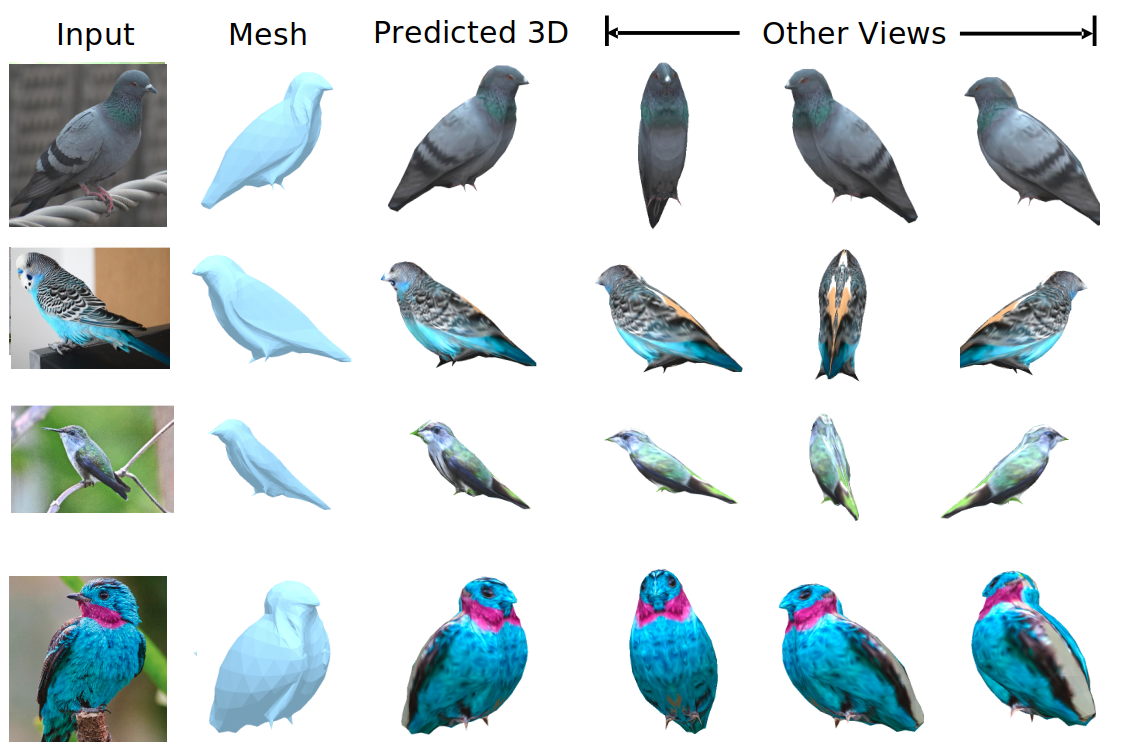
We evaluate our method on different datasets (including ShapeNet, CUB-200-2011, and Pascal3D+) and achieve state-of-the-art results, outperforming all the other supervised and unsupervised methods and 3D representations, all in terms of performance, accuracy, and training time.
Code to reproduce the results for Compositional Attention: Disentangling Search and Retrieval.

Compositional-Attention This repository contains the official implementation for the paper Compositional Attention: Disentangling Search and Retrieval

Code to reproduce the results for Statistically Robust Neural Network Classification, published in UAI 2021

Code to reproduce the results for Statistically Robust Neural Network Classification, published in UAI 2021

This repository contains the source code and data for reproducing results of Deep Continuous Clustering paper

Deep Continuous Clustering Introduction This is a Pytorch implementation of the DCC algorithms presented in the following paper (paper): Sohil Atul Sh

This repository contains the code and models necessary to replicate the results of paper:  How to Robustify Black-Box ML Models? A Zeroth-Order Optimization Perspective
This repository contains the code and models necessary to replicate the results of paper: How to Robustify Black-Box ML Models? A Zeroth-Order Optimization Perspective

Black-Box-Defense This repository contains the code and models necessary to replicate the results of our recent paper: How to Robustify Black-Box ML M

This repository contains the code and models necessary to replicate the results of paper:  How to Robustify Black-Box ML Models? A Zeroth-Order Optimization Perspective
This repository contains the code and models necessary to replicate the results of paper: How to Robustify Black-Box ML Models? A Zeroth-Order Optimization Perspective

Black-Box-Defense This repository contains the code and models necessary to replicate the results of our recent paper: How to Robustify Black-Box ML M

Fast image augmentation library and easy to use wrapper around other libraries. Documentation:  https://albumentations.ai/docs/ Paper about library: https://www.mdpi.com/2078-2489/11/2/125
Fast image augmentation library and easy to use wrapper around other libraries. Documentation: https://albumentations.ai/docs/ Paper about library: https://www.mdpi.com/2078-2489/11/2/125

Albumentations Albumentations is a Python library for image augmentation. Image augmentation is used in deep learning and computer vision tasks to inc

Point Cloud Denoising input segmentation output raw point-cloud valid/clear fog rain de-noised Abstract Lidar sensors are frequently used in environme

Point Cloud Denoising input segmentation output raw point-cloud valid/clear fog rain de-noised Abstract Lidar sensors are frequently used in environme

In this repo we reproduce and extend results of Learning in High Dimension Always Amounts to Extrapolation by Balestriero et al. 2021

In this repo we reproduce and extend results of Learning in High Dimension Always Amounts to Extrapolation by Balestriero et al. 2021. Balestriero et

Releases(v0.2)
Owner
JugLab
GitHub for the JugLab
JugLab
Medical Insurance Cost Prediction using Machine earning

Medical-Insurance-Cost-Prediction-using-Machine-learning - Here in this project, I will use regression analysis to predict medical insurance cost for people in different regions, and based on several

1 Dec 27, 2021
Here I will explain the flow to deploy your custom deep learning models on Ultra96V2.

Xilinx_Vitis_AI This repo will help you to Deploy your Deep Learning Model on Ultra96v2 Board. Prerequisites Vitis Core Development Kit 2019.2 This co

Amin Mamandipoor 1 Feb 08, 2022
使用yolov5训练自己数据集(详细过程)并通过flask部署

使用yolov5训练自己的数据集(详细过程)并通过flask部署 依赖库 torch torchvision numpy opencv-python lxml tqdm flask pillow tensorboard matplotlib pycocotools Windows,请使用 pycoc

HB.com 19 Dec 28, 2022
Boosted neural network for tabular data

XBNet - Xtremely Boosted Network Boosted neural network for tabular data XBNet is an open source project which is built with PyTorch which tries to co

Tushar Sarkar 175 Jan 04, 2023
Indoor Panorama Planar 3D Reconstruction via Divide and Conquer

HV-plane reconstruction from a single 360 image Code for our paper in CVPR 2021: Indoor Panorama Planar 3D Reconstruction via Divide and Conquer (pape

sunset 36 Jan 03, 2023
PyTorch implementation for our NeurIPS 2021 Spotlight paper "Long Short-Term Transformer for Online Action Detection".

Long Short-Term Transformer for Online Action Detection Introduction This is a PyTorch implementation for our NeurIPS 2021 Spotlight paper "Long Short

77 Dec 16, 2022
Unofficial PyTorch implementation of Neural Additive Models (NAM) by Agarwal, et al.

nam-pytorch Unofficial PyTorch implementation of Neural Additive Models (NAM) by Agarwal, et al. [abs, pdf] Installation You can access nam-pytorch vi

Rishabh Anand 11 Mar 14, 2022
ALBERT-pytorch-implementation - ALBERT pytorch implementation

ALBERT-pytorch-implementation developing... 모델의 개념이해를 돕기 위한 구현물로 현재 변수명을 상세히 적었고

BG Kim 3 Oct 06, 2022
NL-Augmenter 🦎 → 🐍 A Collaborative Repository of Natural Language Transformations

NL-Augmenter 🦎 → 🐍 The NL-Augmenter is a collaborative effort intended to add transformations of datasets dealing with natural language. Transformat

684 Jan 09, 2023
Official code of paper "PGT: A Progressive Method for Training Models on Long Videos" on CVPR2021

PGT Code for paper PGT: A Progressive Method for Training Models on Long Videos. Install Run pip install -r requirements.txt. Run python setup.py buil

Bo Pang 27 Mar 30, 2022
ViSER: Video-Specific Surface Embeddings for Articulated 3D Shape Reconstruction

ViSER: Video-Specific Surface Embeddings for Articulated 3D Shape Reconstruction. NeurIPS 2021.

Gengshan Yang 59 Nov 25, 2022
Oscar and VinVL

Oscar: Object-Semantics Aligned Pre-training for Vision-and-Language Tasks VinVL: Revisiting Visual Representations in Vision-Language Models Updates

Microsoft 938 Dec 26, 2022
The Power of Scale for Parameter-Efficient Prompt Tuning

The Power of Scale for Parameter-Efficient Prompt Tuning Implementation of soft embeddings from https://arxiv.org/abs/2104.08691v1 using Pytorch and H

Kip Parker 208 Dec 30, 2022
Code to reproduce the experiments in the paper "Transformer Based Multi-Source Domain Adaptation" (EMNLP 2020)

Transformer Based Multi-Source Domain Adaptation Dustin Wright and Isabelle Augenstein To appear in EMNLP 2020. Read the preprint: https://arxiv.org/a

CopeNLU 36 Dec 05, 2022
Multi-query Video Retreival

Multi-query Video Retreival

Princeton Visual AI Lab 17 Nov 22, 2022
Decision Transformer: A brand new Offline RL Pattern

DecisionTransformer_StepbyStep Intro Decision Transformer: A brand new Offline RL Pattern. 这是关于NeurIPS 2021 热门论文Decision Transformer的复现。 👍 原文地址: Deci

Irving 14 Nov 22, 2022
Self-Learned Video Rain Streak Removal: When Cyclic Consistency Meets Temporal Correspondence

In this paper, we address the problem of rain streaks removal in video by developing a self-learned rain streak removal method, which does not require any clean groundtruth images in the training pro

Yang Wenhan 44 Dec 06, 2022
The pytorch implementation of the paper "text-guided neural image inpainting" at MM'2020

TDANet: Text-Guided Neural Image Inpainting, MM'2020 (Oral) MM | ArXiv This repository implements the paper "Text-Guided Neural Image Inpainting" by L

LisaiZhang 75 Dec 22, 2022
Differentiable Abundance Matching With Python

shamnet Differentiable Stellar Population Synthesis Installation You can install shamnet with pip. Installation dependencies are numpy, jax, corrfunc,

5 Dec 17, 2021
LQM - Improving Object Detection by Estimating Bounding Box Quality Accurately

Improving Object Detection by Estimating Bounding Box Quality Accurately Abstract Object detection aims to locate and classify object instances in ima

IM Lab., POSTECH 0 Sep 28, 2022