mipnerf_pl
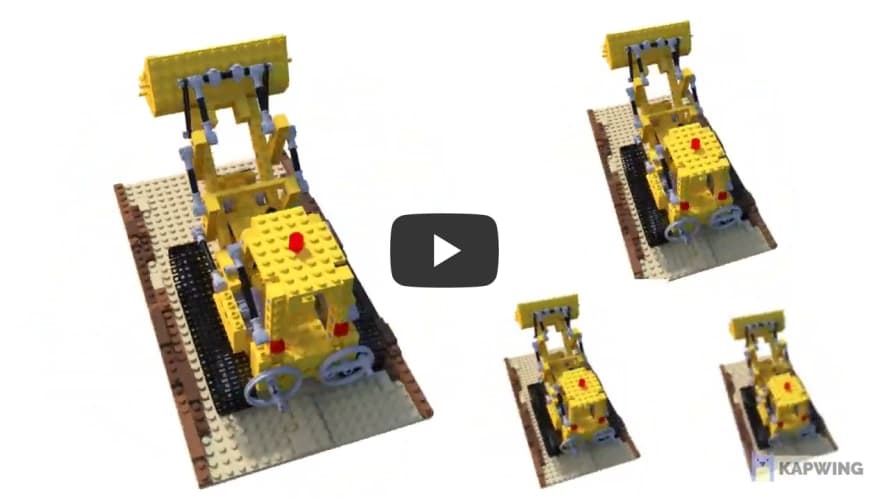
Unofficial pytorch-lightning implement of Mip-NeRF, Here are some results generated by this repository (pre-trained models are provided below):
| Multi Scale Train And Multi Scale Test | Single Scale | |||||||||||||
|---|---|---|---|---|---|---|---|---|---|---|---|---|---|---|
| PNSR | SSIM | PSNR | SSIM | |||||||||||
| Full Res | 1/2 Res | 1/4 Res | 1/8 Res | Aveage (PyTorch) |
Aveage (Jax) |
Full Res | 1/2 Res | 1/4 Res | 1/8 Res | Average (PyTorch) |
Average (Jax) |
Full Res | ||
| lego | 34.412 | 35.640 | 36.074 | 35.482 | 35.402 | 35.736 | 0.9719 | 0.9843 | 0.9897 | 0.9912 | 0.9843 | 0.9843 | 35.198 | 0.985 |

The top image of each column is groundtruth and the bottom image is Mip-NeRF render in different resolutions.
The above results are trained on the lego dataset with 300k steps for single-scale and multi-scale datasets respectively, and the pre-trained model can be found here. Feel free to contribute more datasets.
Installation
We recommend using Anaconda to set up the environment. Run the following commands:
# Clone the repo
git clone https://github.com/hjxwhy/mipnerf_pl.git; cd mipnerf_pl
# Create a conda environment
conda create --name mipnerf python=3.9.12; conda activate mipnerf
# Prepare pip
conda install pip; pip install --upgrade pip
# Install PyTorch
pip3 install torch torchvision --extra-index-url https://download.pytorch.org/whl/cu113
# Install requirements
pip install -r requirements.txt
Dataset
Download the datasets from the NeRF official Google Drive and unzip nerf_synthetic.zip. You can generate the multi-scale dataset used in the paper with the following command:
# Generate all scenes
python datasets/convert_blender_data.py --blenderdir UZIP_DATA_DIR --outdir OUT_DATA_DIR
# If you only want to generate a scene, you can:
python datasets/convert_blender_data.py --blenderdir UZIP_DATA_DIR --outdir OUT_DATA_DIR --object_name lego
Running
Train
To train a single-scale lego Mip-NeRF:
# You can specify the GPU numbers and batch size at the end of command,
# such as num_gpus 2 train.batch_size 4096 val.batch_size 8192 and so on.
# More parameters can be found in the configs/lego.yaml file.
python train.py --out_dir OUT_DIR --data_path UZIP_DATA_DIR --dataset_name blender exp_name EXP_NAME
To train a multi-scale lego Mip-NeRF:
python train.py --out_dir OUT_DIR --data_path OUT_DATA_DIR --dataset_name multi_blender exp_name EXP_NAME
Evaluation
You can evaluate both single-scale and multi-scale models under the eval.sh guidance, changing all directories to your directory. Alternatively, you can use the following command for evaluation.
# eval single scale model
python eval.py --ckpt CKPT_PATH --out_dir OUT_DIR --scale 1 --save_image
# eval multi scale model
python eval.py --ckpt CKPT_PATH --out_dir OUT_DIR --scale 4 --save_image
# summarize the result again if you have saved the pnsr.txt and ssim.txt
python eval.py --ckpt CKPT_PATH --out_dir OUT_DIR --scale 4 --summa_only
Render Spheric Path Video
It also provide a script for rendering spheric path video
# Render spheric video
python render_video.py --ckpt CKPT_PATH --out_dir OUT_DIR --scale 4
# generate video if you already have images
python render_video.py --gen_video_only --render_images_dir IMG_DIR_RENDER
Visualize All Poses
The script modified from nerfplusplus supports visualize all poses which have been reorganized to right-down-forward coordinate. Multi-scale have different camera focal length which is equivalent to different resolutions.


Citation
Kudos to the authors for their amazing results:
@misc{barron2021mipnerf,
      title={Mip-NeRF: A Multiscale Representation for Anti-Aliasing Neural Radiance Fields},
      author={Jonathan T. Barron and Ben Mildenhall and Matthew Tancik and Peter Hedman and Ricardo Martin-Brualla and Pratul P. Srinivasan},
      year={2021},
      eprint={2103.13415},
      archivePrefix={arXiv},
      primaryClass={cs.CV}
}
Acknowledgements
Thansks to mipnerf, mipnerf-pytorch, nerfplusplus, nerf_pl

 2 May 05, 2022
 58 Dec 23, 2022
 15 Dec 22, 2022
 119 Jan 07, 2023
 28 Jan 04, 2023
 17 Nov 27, 2022
 0 Jan 20, 2022
 24 Nov 23, 2022
 170 Oct 25, 2022
 25 Oct 26, 2022
 200 Jan 02, 2023
 645 Dec 29, 2022
 125 Dec 13, 2022
 769 Dec 25, 2022
 140 Jan 02, 2023
 27 Dec 08, 2022
 26 Dec 21, 2022
 4 Dec 22, 2022
 9 Jun 06, 2022
 1.8k Jan 08, 2023