VaxNeRF
Paper | Google Colab 

This is the official implementation of VaxNeRF (Voxel-Accelearated NeRF).
VaxNeRF provides very fast training and slightly higher scores compared to original (Jax)NeRF!!

Updates!
- December 26, 2021
- We Vax'ed MipNeRF!
- We achieved roughly 28 times faster training in terms of producing the final accuracy of the original NeRF.
- See -> https://github.com/naruya/mipnerf
- December 2, 2021
- We Vax'ed PlenOctrees! You can train NeRF-SH about 5x faster.
- https://github.com/naruya/plenoctree (out of maintenance)
| Visual Hull (1sec) | |||
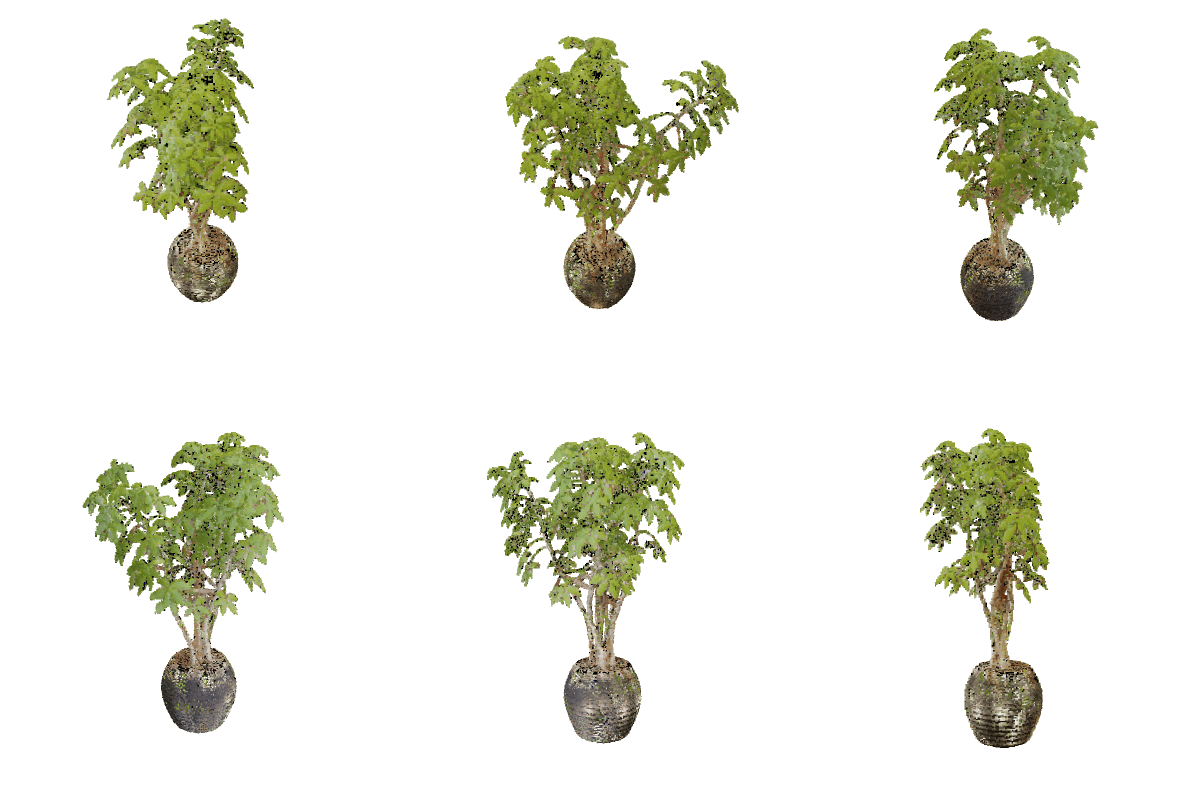
|
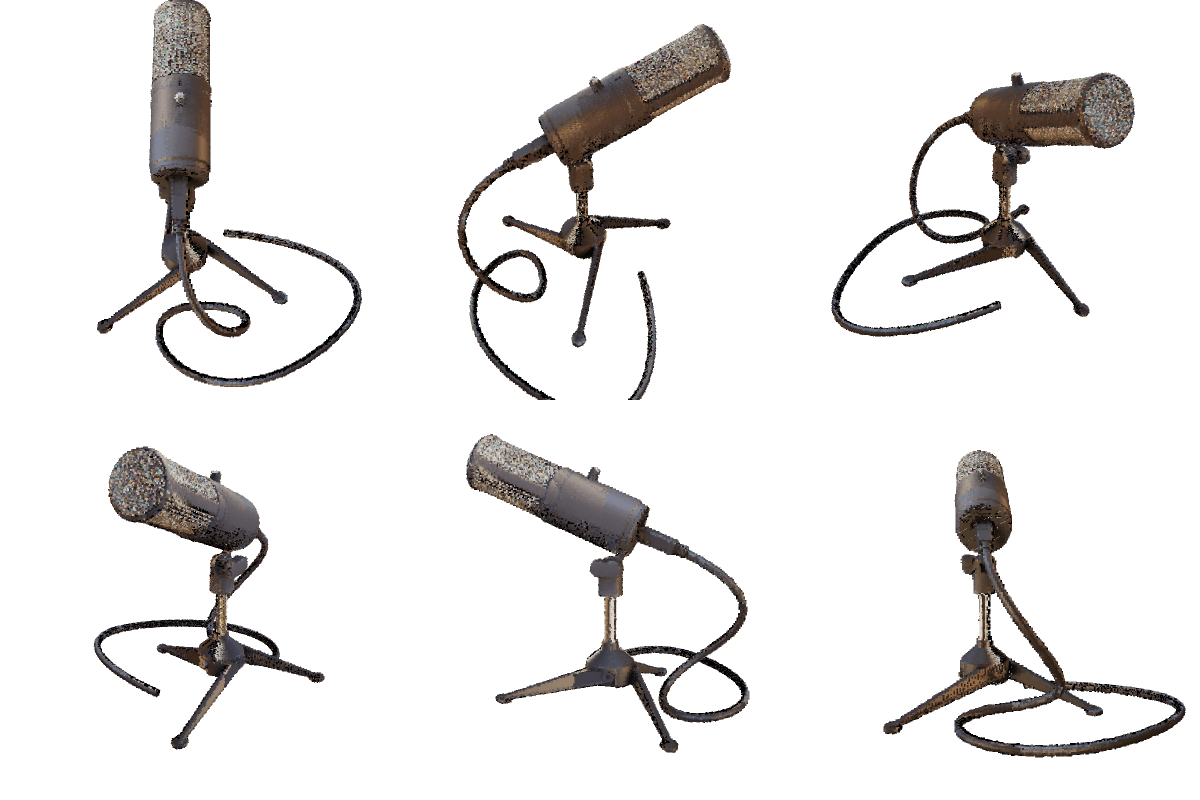
|
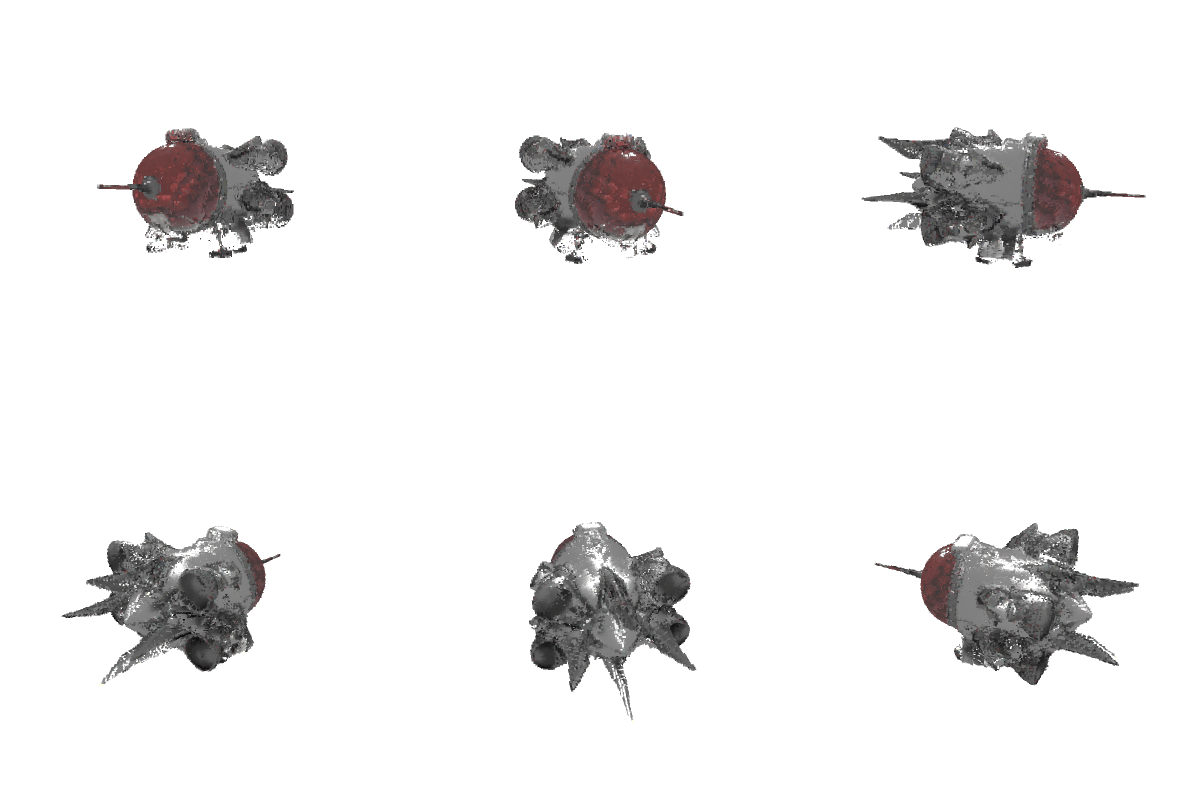
|

|
| NeRF (10min) | |||
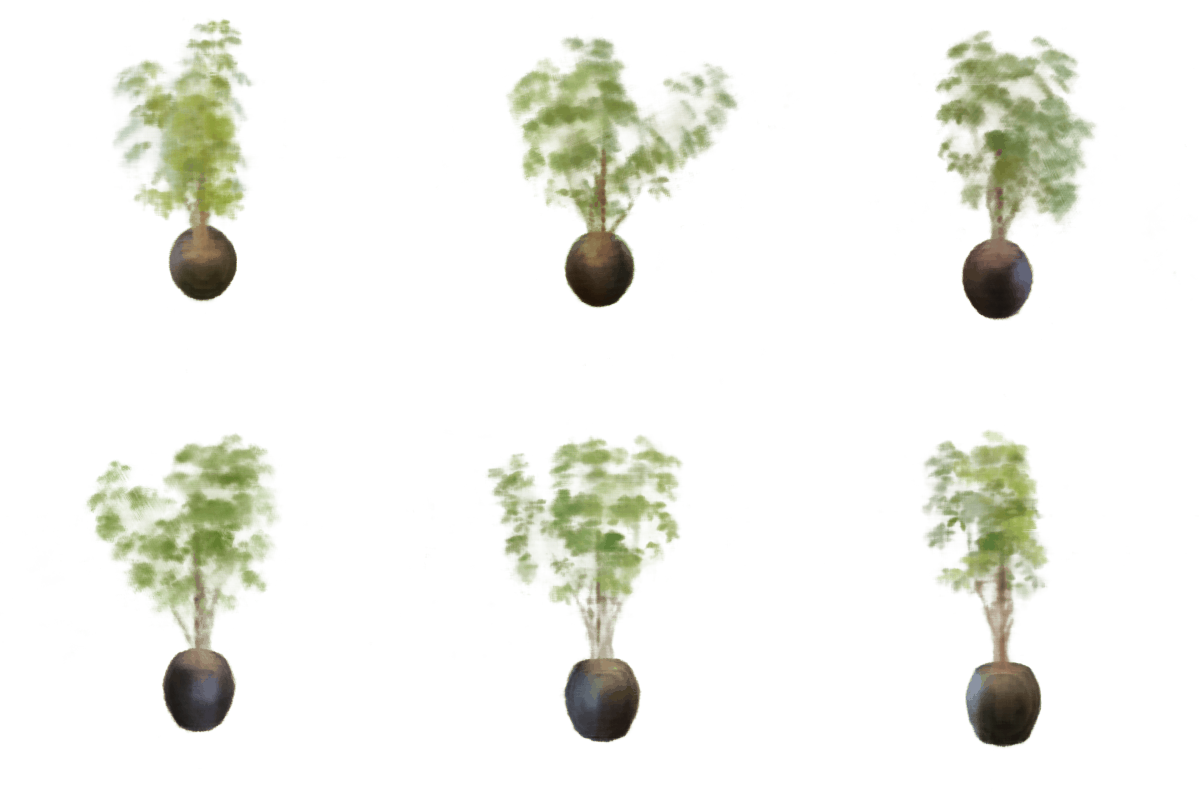
|
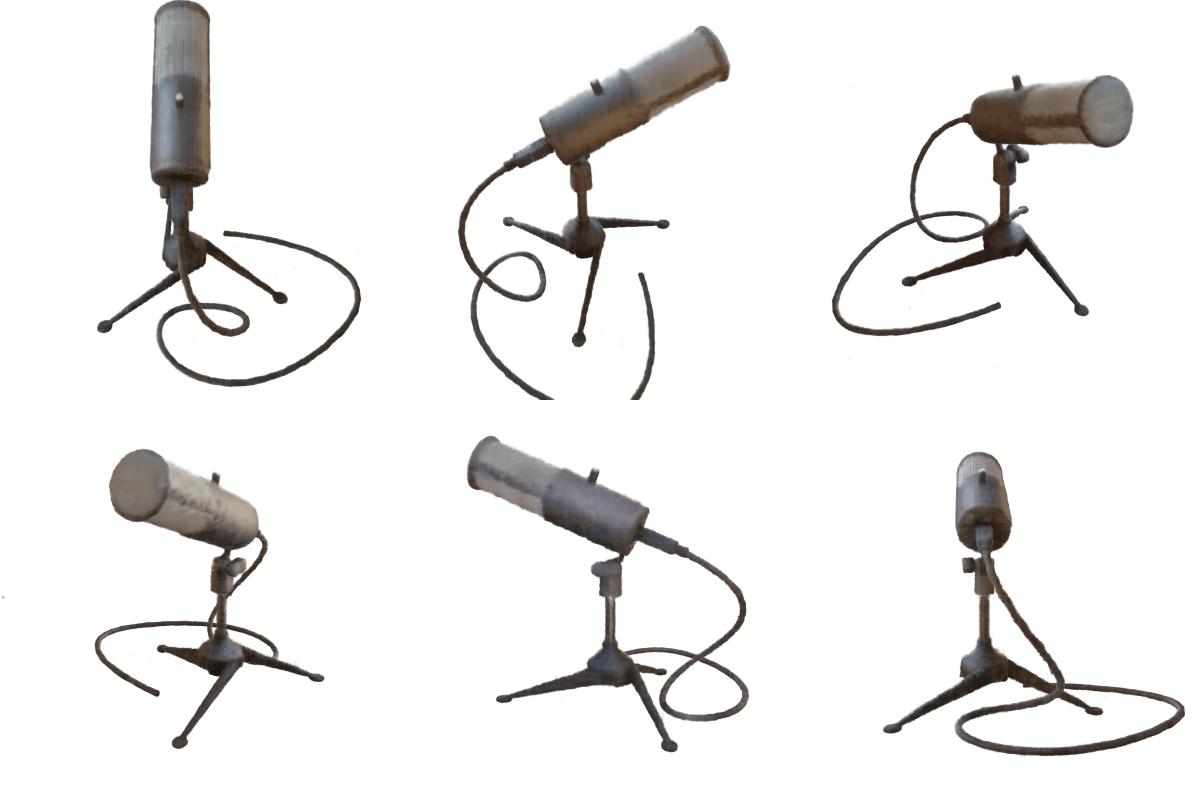
|
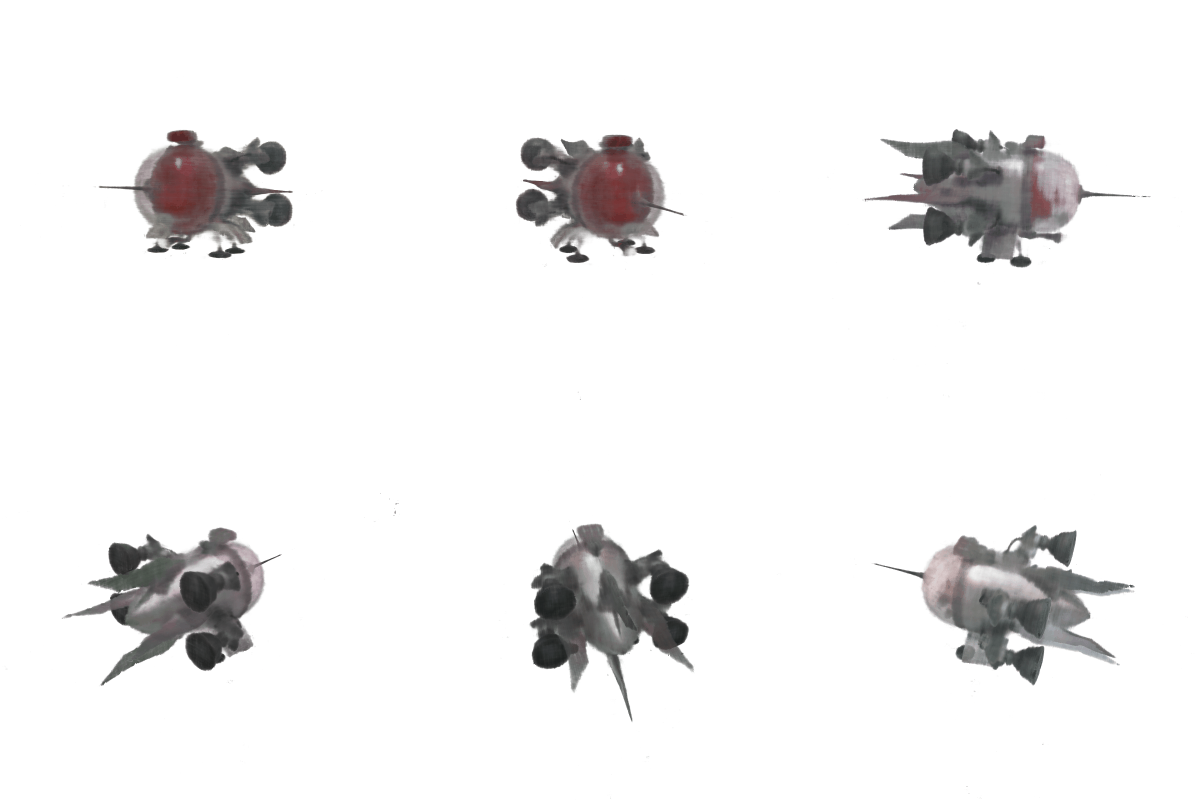
|
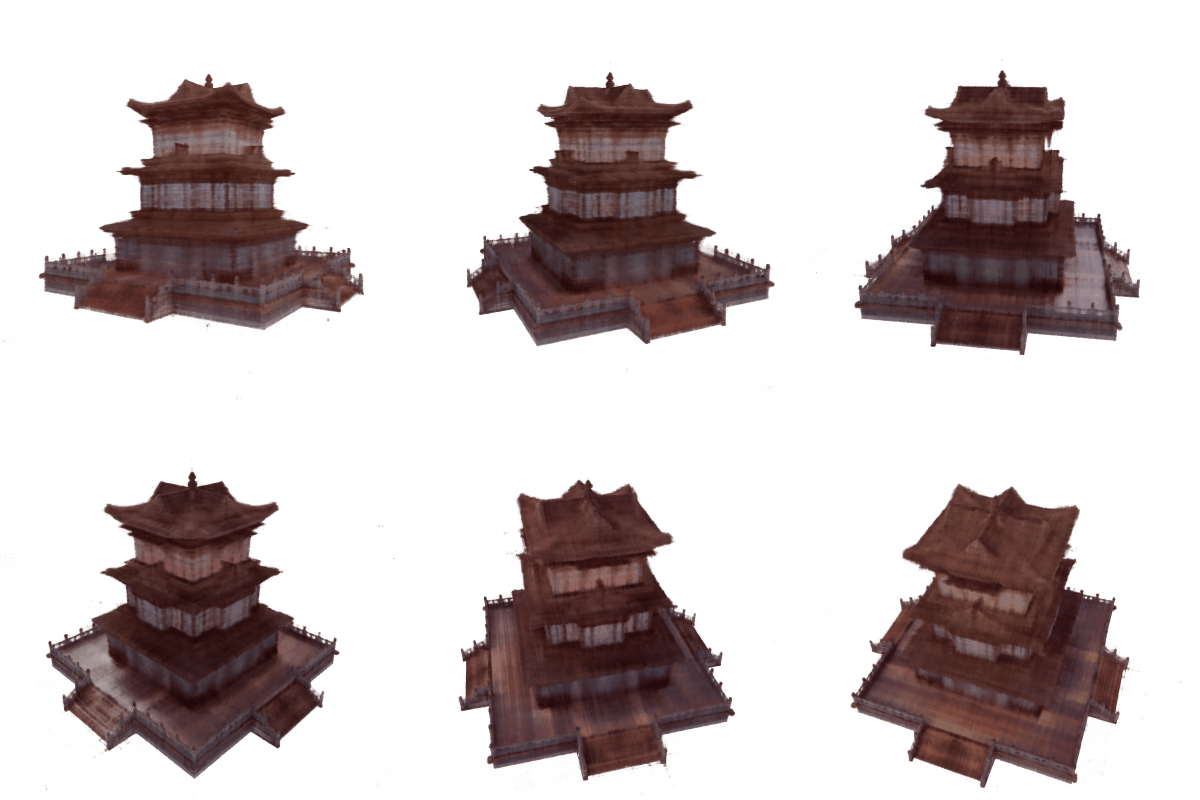
|
| VaxNeRF (10min) | |||
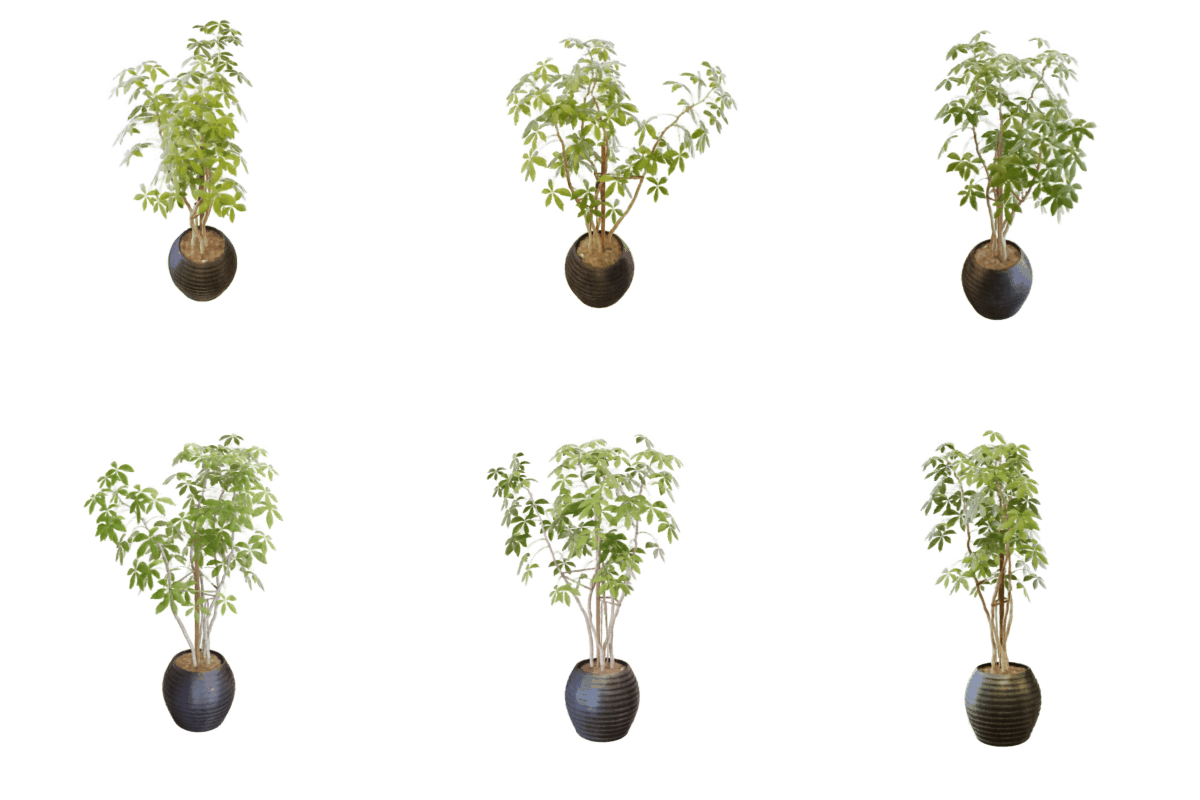
|
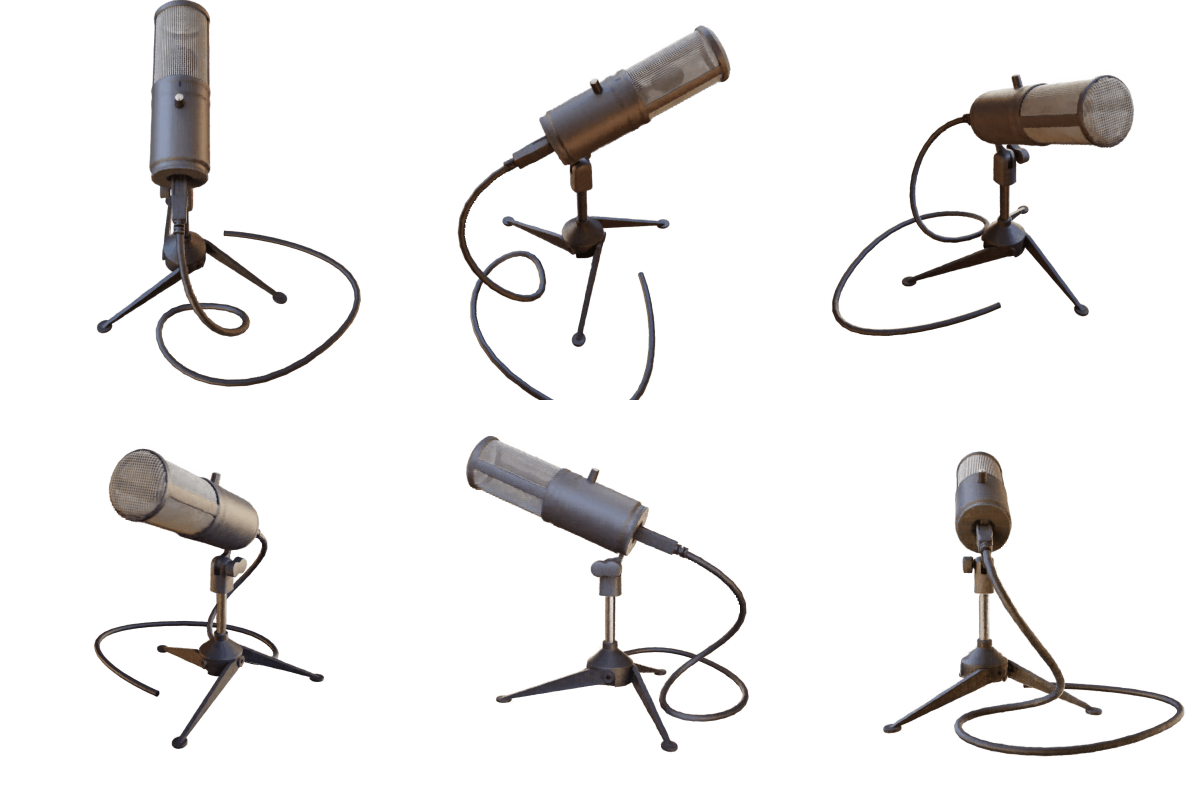
|
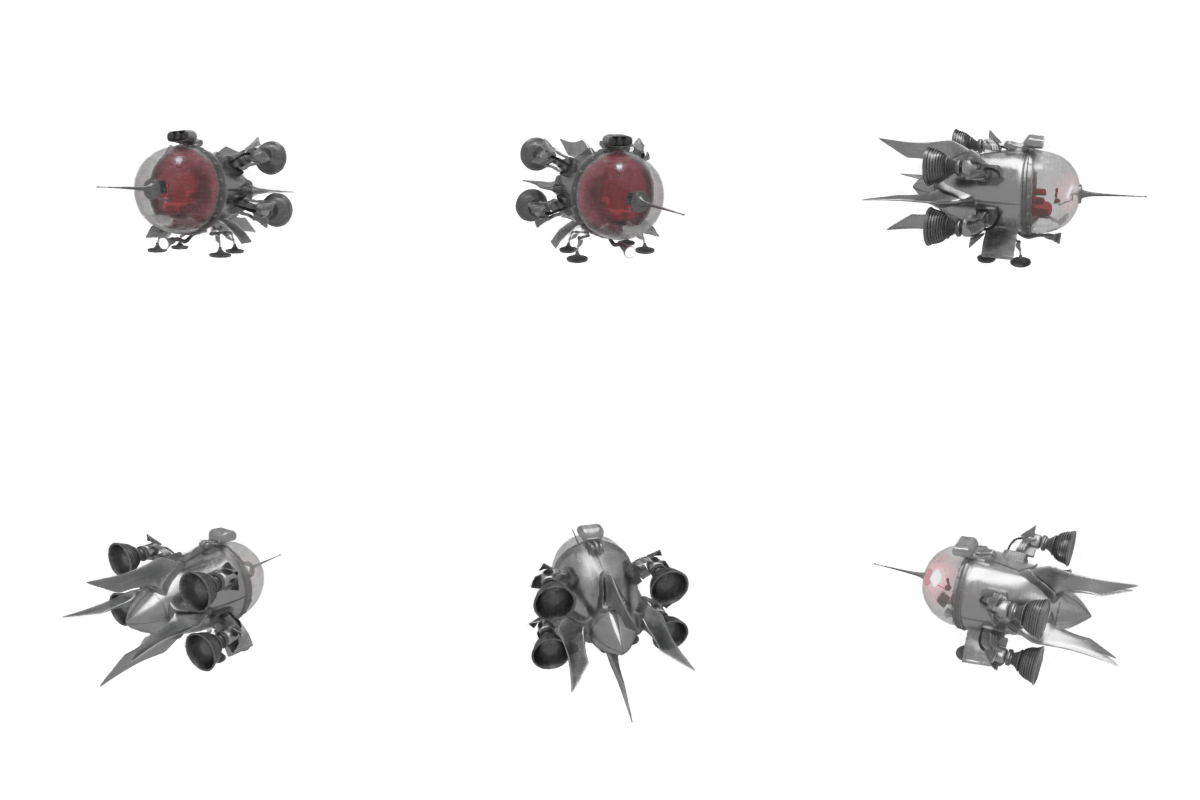
|
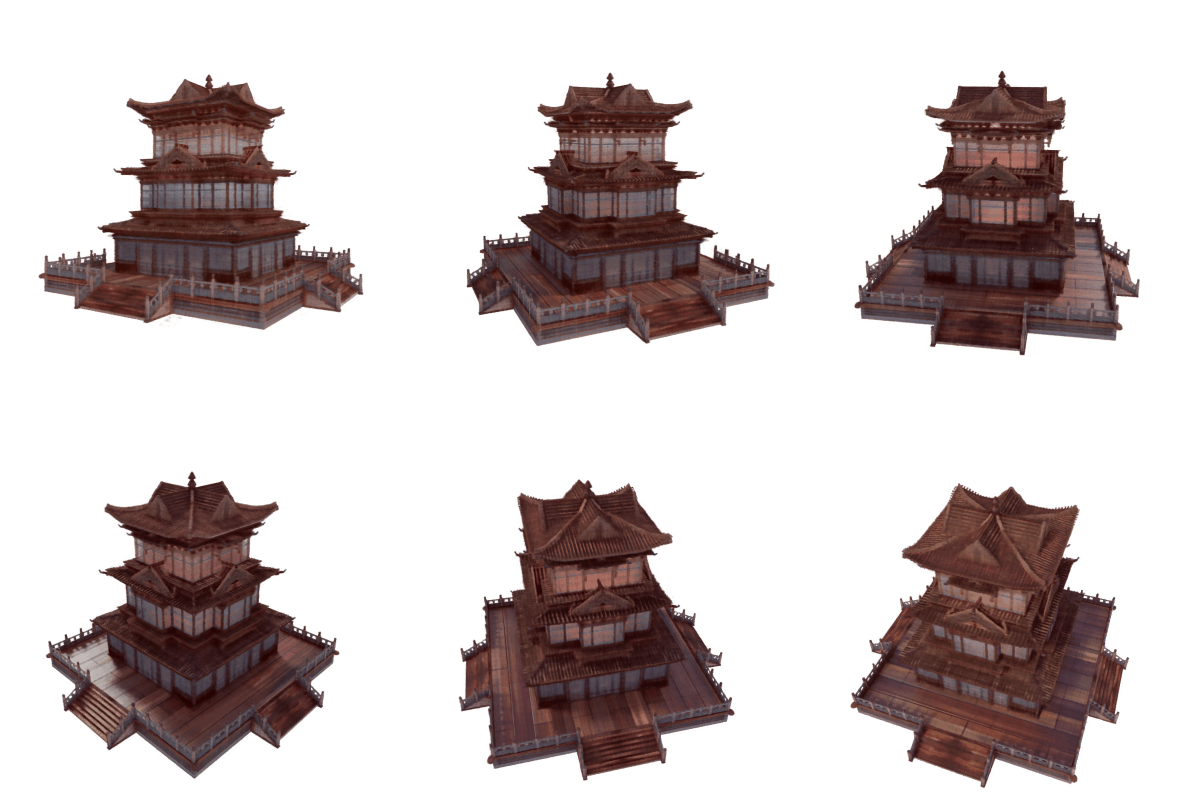
|
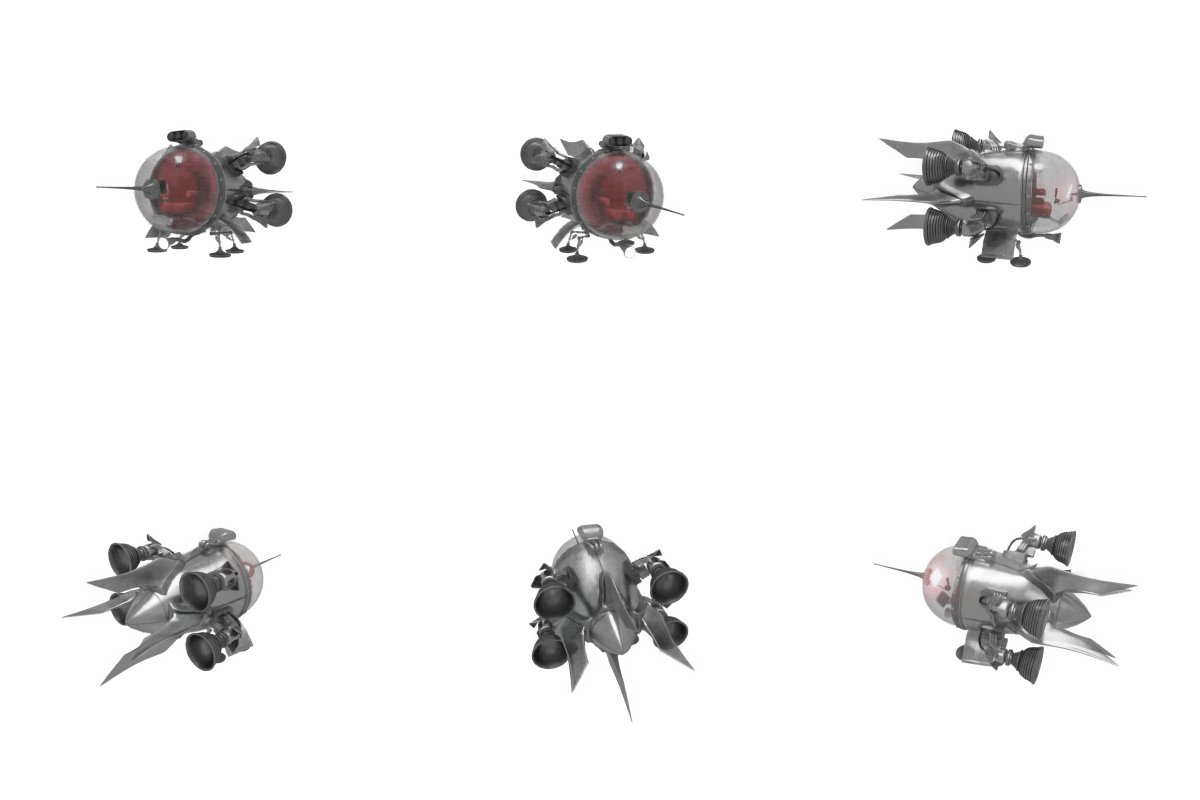
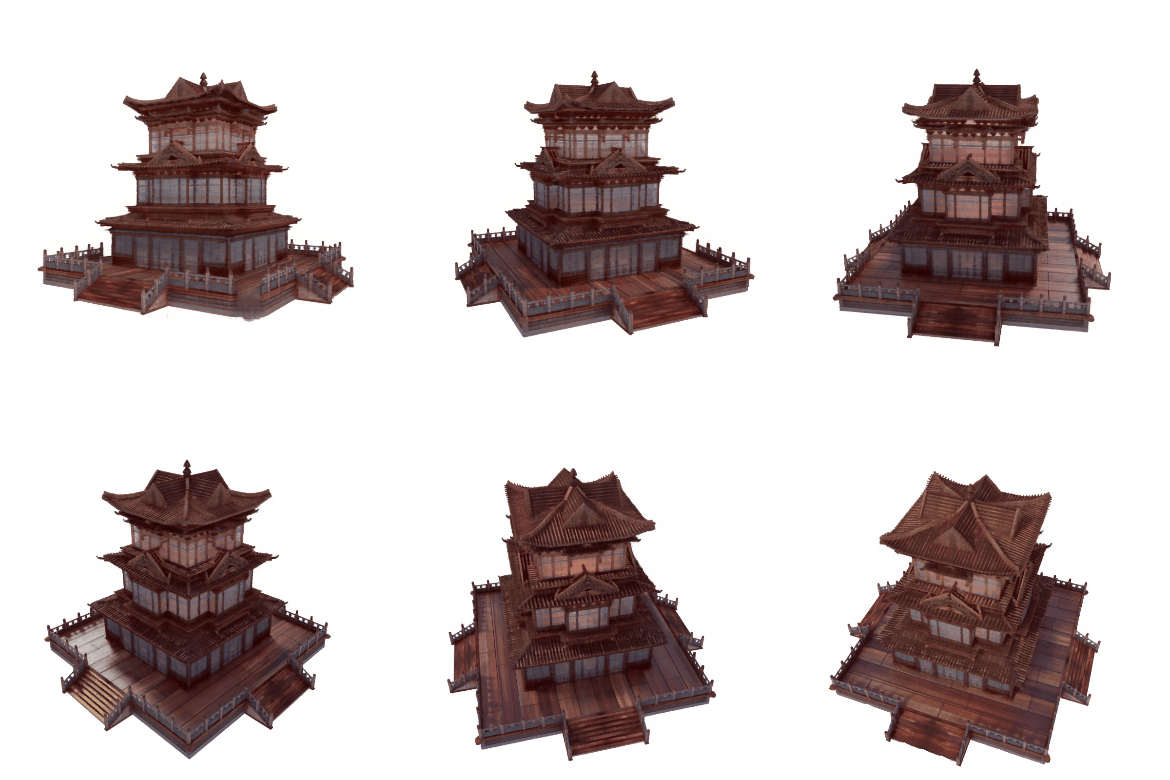
| Vax-MipNeRF (10min) | |||
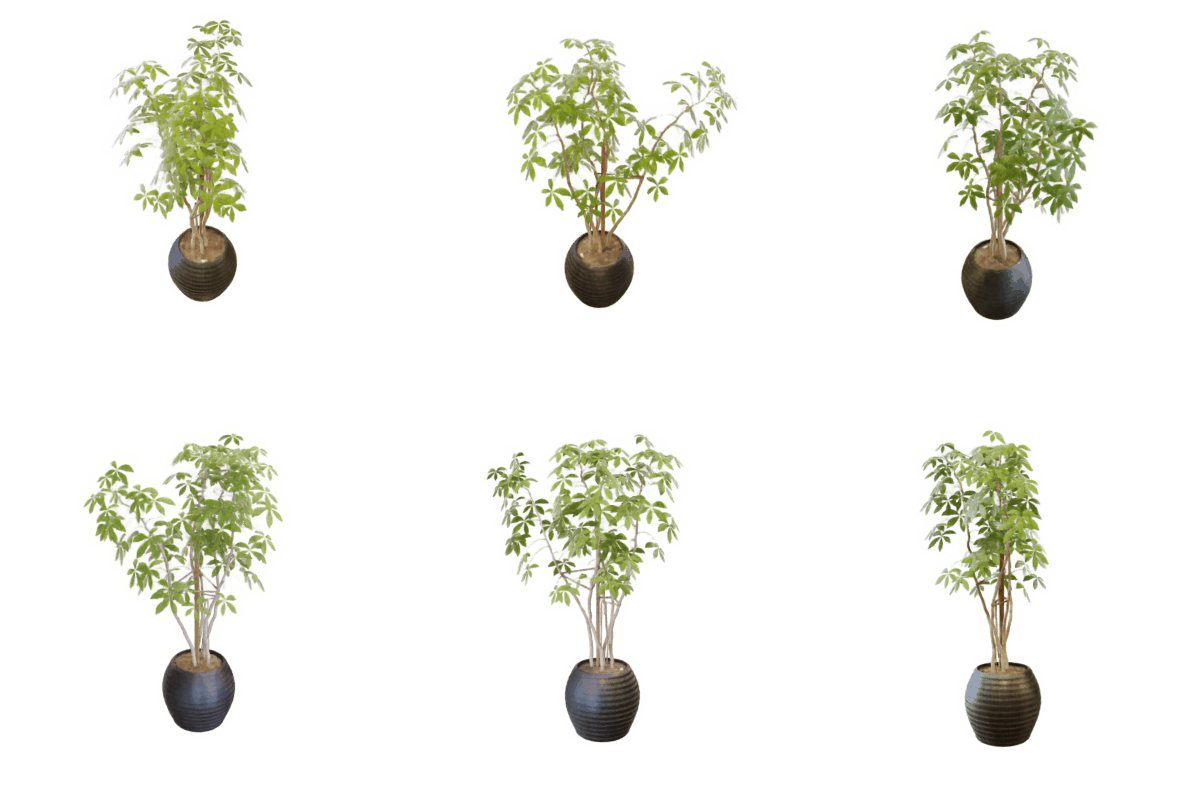
|
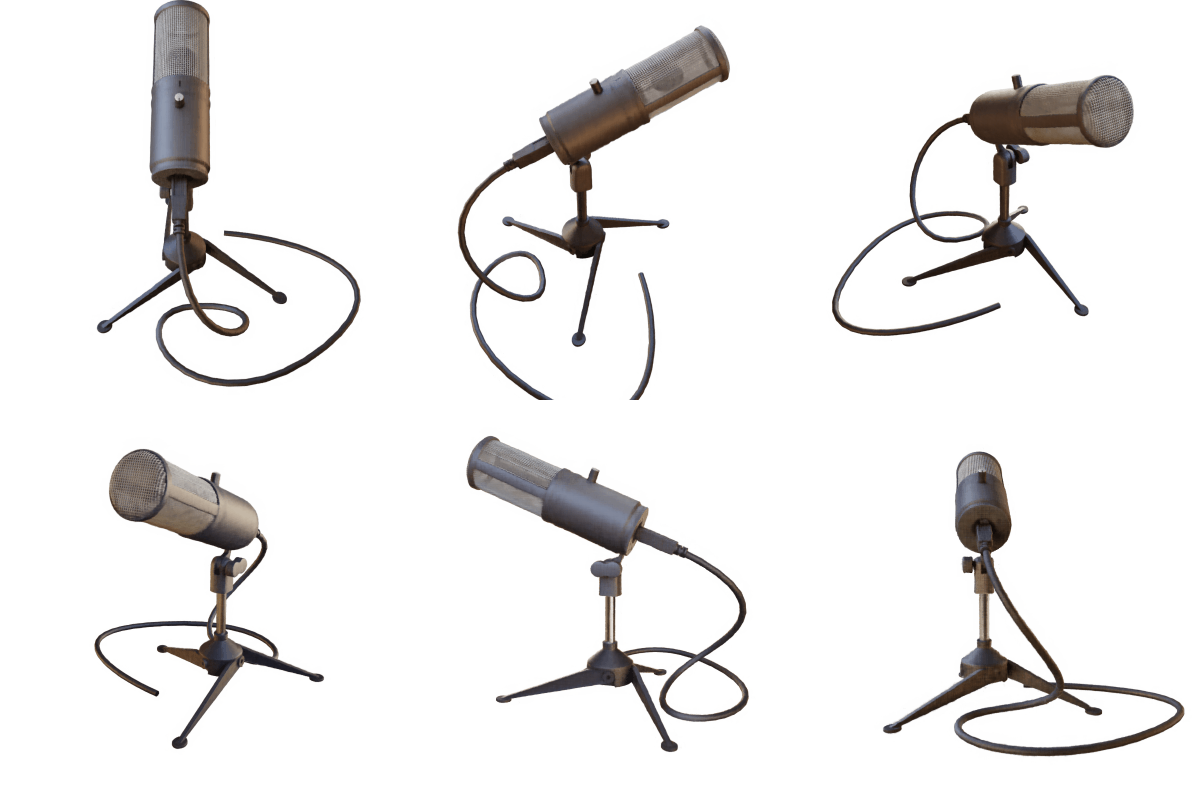
|
|
|

Installation
Please see the README of JaxNeRF.
The jax and jaxlib versions that we have tested are as follows.
jax                     0.2.24
jaxlib                  0.1.69+cuda111
jax                     0.2.17
jaxlib                  0.1.65+cuda110
Quick start
Training
# make a bounding volume voxel using Visual Hull
python visualhull.py \
    --config configs/demo \
    --data_dir data/nerf_synthetic/lego \
    --voxel_dir data/voxel_dil7/lego \
    --dilation 7 \
    --thresh 1. \
    --alpha_bkgd

# train VaxNeRF
python train.py \
    --config configs/demo \
    --data_dir data/nerf_synthetic/lego \
    --voxel_dir data/voxel_dil7/lego \
    --train_dir logs/lego_vax_c800 \
    --num_coarse_samples 800 \
    --render_every 2500
Evaluation
python eval.py \
    --config configs/demo \
    --data_dir data/nerf_synthetic/lego \
    --voxel_dir data/voxel_dil7/lego \
    --train_dir logs/lego_vax_c800 \
    --num_coarse_samples 800
Try other NeRFs
Original NeRF
python train.py \
    --config configs/demo \
    --data_dir data/nerf_synthetic/lego \
    --train_dir logs/lego_c64f128 \
    --num_coarse_samples 64 \
    --num_fine_samples 128 \
    --render_every 2500
VaxNeRF with hierarchical sampling
# small `num_xx_samples` needs more dilated voxel (see our paper)
python visualhull.py \
    --config configs/demo \
    --data_dir data/nerf_synthetic/lego \
    --voxel_dir data/voxel_dil47/lego \
    --dilation 47 \
    --thresh 1. \
    --alpha_bkgd

# train VaxNeRF
python train.py \
    --config configs/demo \
    --data_dir data/nerf_synthetic/lego \
    --voxel_dir data/voxel_dil47/lego \
    --train_dir logs/lego_vax_c64f128 \
    --num_coarse_samples 64 \
    --num_fine_samples 128 \
    --render_every 2500
Option details
Visual Hull
- Use
--dilation 11/--dilation 51for NSVF-Synthetic dataset for training VaxNeRF without / with hierarchical sampling. - The following options were used
- Since the
Lifestyle,Spaceship,Steamtrainscenes (included in the NSVF dataset) do not have alpha channel, please use following options and remove--alpha_bkgdoption.- Lifestyle:
--thresh 0.95, Spaceship:--thresh 0.9, Steamtrain:--thresh 0.95
- Lifestyle:
NeRFs
- We used
--small_lr_at_firstoption for original NeRF training on theRobotandSpaceshipscenes to avoid local minimum.
Code modification from JaxNeRF
- You can see the main difference between (Jax)NeRF (
jaxnerfbranch) and VaxNeRF (vaxnerfbranch) here - The
mainbranch (derived from thevaxnerfbranch) contains the following features.- Support for original NeRF
- Support for VaxNeRF with hierarchical sampling
- Support for the NSVF-Synthetic dataset
- Visualization of number of sampling points evaluated by MLP (VaxNeRF)
- Automatic choice of the number of sampling points to be evaluated (VaxNeRF)
Citation
Please use the following bibtex for citations:
@article{kondo2021vaxnerf,
  title={VaxNeRF: Revisiting the Classic for Voxel-Accelerated Neural Radiance Field},
  author={Kondo, Naruya and Ikeda, Yuya and Tagliasacchi, Andrea and Matsuo, Yutaka and Ochiai, Yoichi and Gu, Shixiang Shane},
  journal={arXiv preprint arXiv:2111.13112},
  year={2021}
}
and also cite the original NeRF paper and JaxNeRF implementation:
@inproceedings{mildenhall2020nerf,
  title={NeRF: Representing Scenes as Neural Radiance Fields for View Synthesis},
  author={Ben Mildenhall and Pratul P. Srinivasan and Matthew Tancik and Jonathan T. Barron and Ravi Ramamoorthi and Ren Ng},
  year={2020},
  booktitle={ECCV},
}

@software{jaxnerf2020github,
  author = {Boyang Deng and Jonathan T. Barron and Pratul P. Srinivasan},
  title = {{JaxNeRF}: an efficient {JAX} implementation of {NeRF}},
  url = {https://github.com/google-research/google-research/tree/master/jaxnerf},
  version = {0.0},
  year = {2020},
}
Acknowledgement
We'd like to express deep thanks to the inventors of NeRF and JaxNeRF.
Have a good VaxNeRF'ed life!

 4 Sep 20, 2022
 7 Nov 30, 2022
 94 Dec 28, 2022
 11.4k Jan 09, 2023
 248 Dec 25, 2022
 2 Jan 23, 2022
 29 Dec 28, 2022
 4 Aug 07, 2022
 77 Dec 27, 2022
 3 May 09, 2022
 170 Dec 28, 2022
 60 Dec 27, 2022
 55 Nov 29, 2022
 62 Dec 25, 2022
 32 Nov 03, 2022
 1 Sep 16, 2021
 234 Dec 18, 2022
 850 Jan 07, 2023
 73 Sep 18, 2022
 2 Jan 31, 2022