Element selection for functional materials discovery by integrated machine learning of atomic contributions to properties

Overview

Element selection for functional materials discovery by integrated machine learning of atomic contributions to properties

8.11.2021 Andrij Vasylenko

Introduction

At the high level of consideration, the fundamental differences between the materials lie in the differences between the constituent chemical elements. Before the differences are detailed with the stoichiometric ratios and then atomic structures, the materials can be conceptualised at the level of their phase fields – the fields of all possible configurations of the selected chemical elements.

This code, PhaseSelect, classifies the materials at the level of sets of elements with respect to the likelihood to manifest a target functional property, while being synthetically accessible.

Please cite A.Vasylenko et al. 'Element selection for functional materials discovery by integrated machine learning of atomic contributions to properties' arXiv:2202.01051, (2022)

Requirements

python-3.7

pip (version 19.0 or later)

OS:

Ubuntu (version 18.04 or later)

MacOS (Catalina 10.15.6 or later)

Dependencies:

TensorFlow-2.4.1

scikit-learn-0.24.0

numpy-1.19.4

pandas-1.1.4

You might also like...
An end-to-end regression problem of predicting the price of properties in Bangalore.

Bangalore-House-Price-Prediction An end-to-end regression problem of predicting the price of properties in Bangalore. Deployed in Heroku using Flask.

TUPÃ was developed to analyze electric field properties in molecular simulations

TUPÃ: Electric field analyses for molecular simulations What is TUPÃ? TUPÃ (pronounced as tu-pan) is a python algorithm that employs MDAnalysis engine

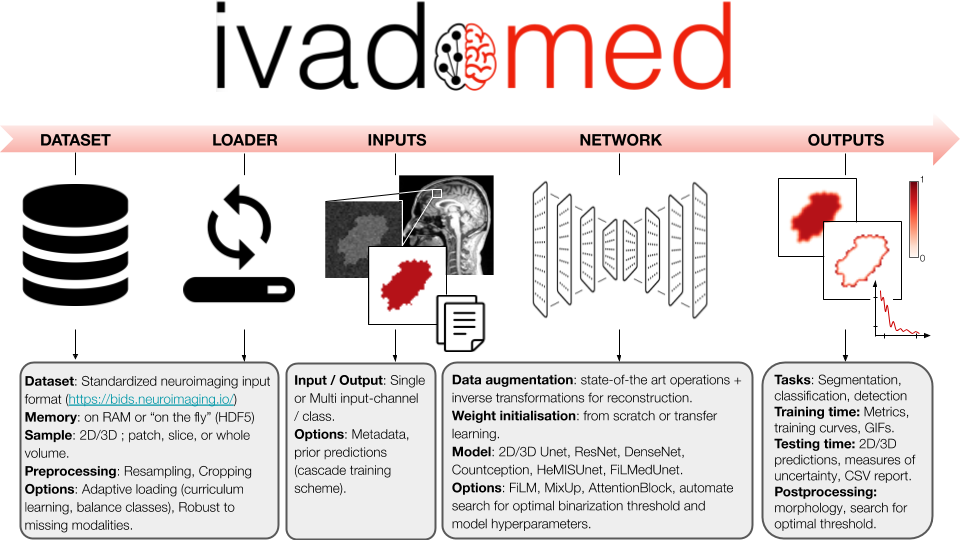
ivadomed is an integrated framework for medical image analysis with deep learning.

Repository on the collaborative IVADO medical imaging project between the Mila and NeuroPoly labs.

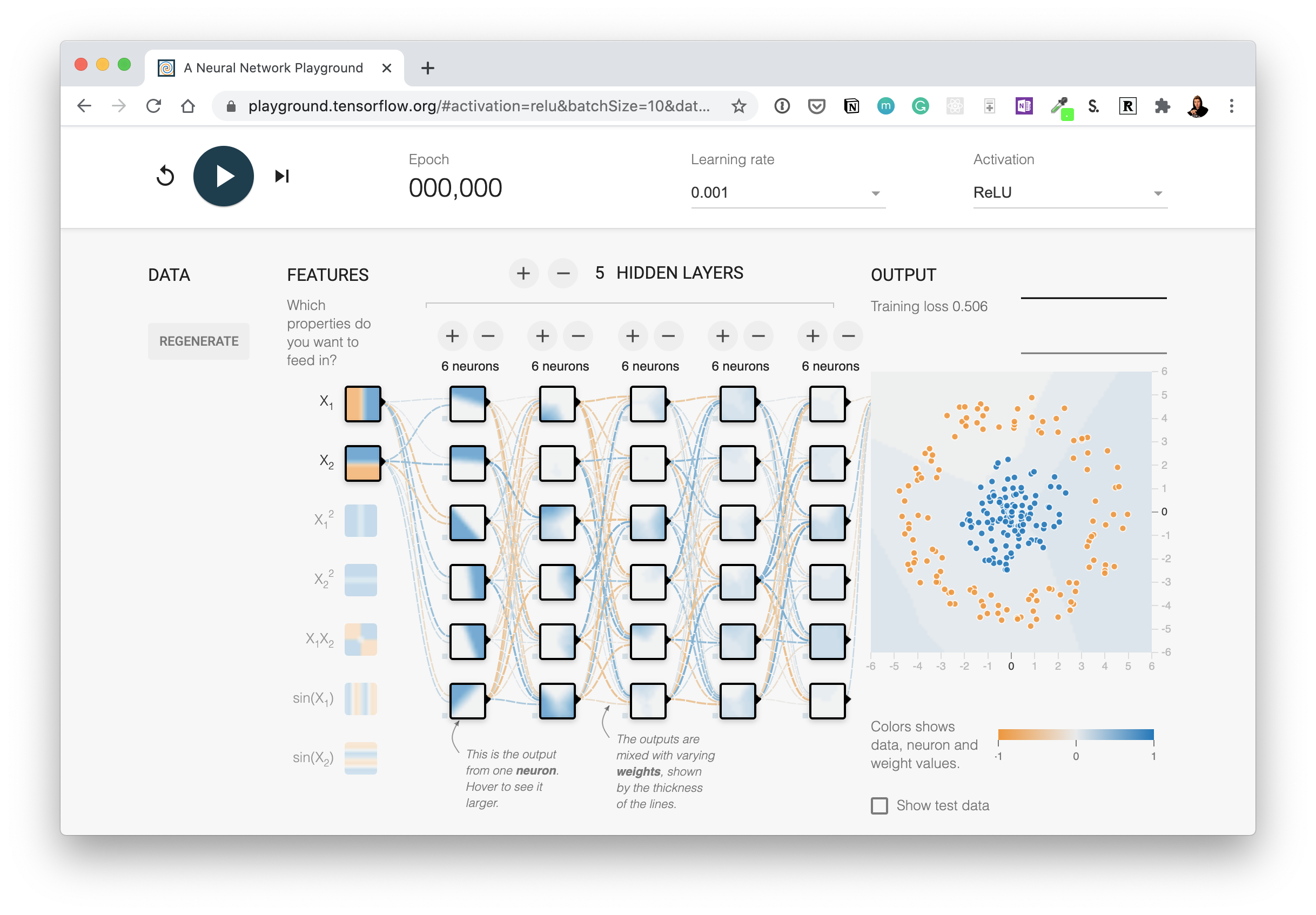
All course materials for the Zero to Mastery Deep Learning with TensorFlow course.

All course materials for the Zero to Mastery Deep Learning with TensorFlow course.

Pre-trained model, code, and materials from the paper
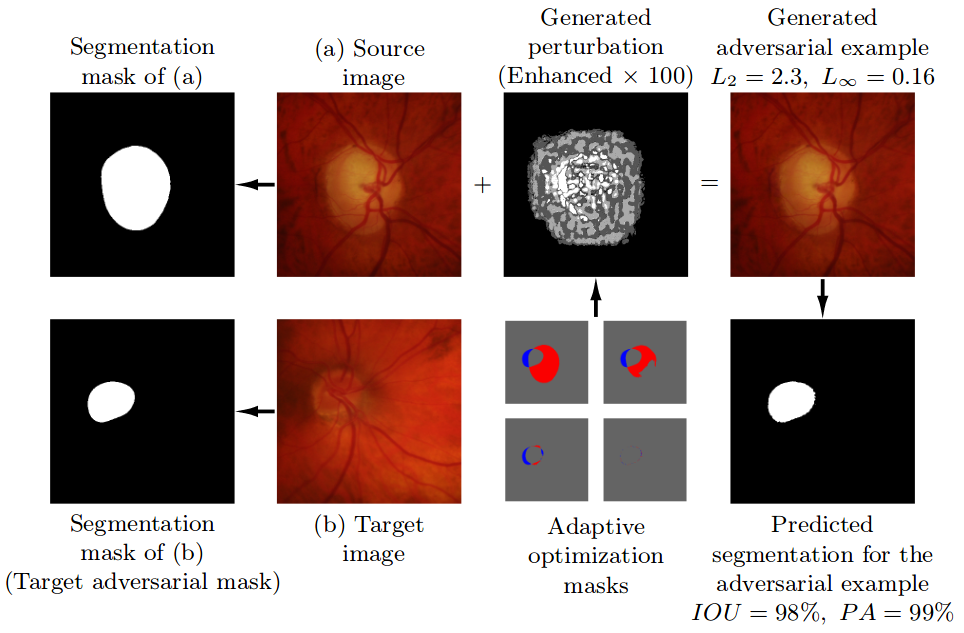
Pre-trained model, code, and materials from the paper "Impact of Adversarial Examples on Deep Learning Models for Biomedical Image Segmentation" (MICCAI 2019).

Adaptive Segmentation Mask Attack This repository contains the implementation of the Adaptive Segmentation Mask Attack (ASMA), a targeted adversarial

Useful materials and tutorials for 110-1 NTU DBME5028 (Application of Deep Learning in Medical Imaging)

Useful materials and tutorials for 110-1 NTU DBME5028 (Application of Deep Learning in Medical Imaging)

The deployment framework aims to provide a simple, lightweight, fast integrated, pipelined deployment framework that ensures reliability, high concurrency and scalability of services.

savior是一个能够进行快速集成算法模块并支持高性能部署的轻量开发框架。能够帮助将团队进行快速想法验证(PoC),避免重复的去github上找模型然后复现模型;能够帮助团队将功能进行流程拆解,很方便的提高分布式执行效率;能够有效减少代码冗余,减少不必要负担。

Discretized Integrated Gradients for Explaining Language Models (EMNLP 2021)

Discretized Integrated Gradients for Explaining Language Models (EMNLP 2021) Overview of paths used in DIG and IG. w is the word being attributed. The

Official PyTorch implementation of "AASIST: Audio Anti-Spoofing using Integrated Spectro-Temporal Graph Attention Networks"

AASIST This repository provides the overall framework for training and evaluating audio anti-spoofing systems proposed in 'AASIST: Audio Anti-Spoofing

Releases(v.1.0.0)
  • v.1.0.0(Dec 20, 2022)

    PhaseSelect focuses on quantitative assessment of materials at the early stages of materials discovery workflow, and assists selection of chemical elements to combine.

    The package enables:

    • Learning elemental features from elemental co-occurrence in all previously studied materials
    • Classification of phase fields (sets of elements) w.r.t. high- and low- performing classes for properties of interest
    • Regression to predict a maximum value of the property of interest within a phase field.
    • Ranking phase fields w.r.t. chemical similarity as a metrics for synthetic accessibility within a phase field.
    Source code(tar.gz)
    Source code(zip)
Owner
Leverhulme Research Centre for Functional Materials Design
Code hosted here has been developed by researchers working with the LRC, hosted at the University of Liverpool
Leverhulme Research Centre for Functional Materials Design
Hierarchical Few-Shot Generative Models

Hierarchical Few-Shot Generative Models Giorgio Giannone, Ole Winther This repo contains code and experiments for the paper Hierarchical Few-Shot Gene

Giorgio Giannone 6 Dec 12, 2022
🧮 Matrix Factorization for Collaborative Filtering is just Solving an Adjoint Latent Dirichlet Allocation Model after All

Accompanying source code to the paper "Matrix Factorization for Collaborative Filtering is just Solving an Adjoint Latent Dirichlet Allocation Model A

Florian Wilhelm 39 Dec 03, 2022
DANet for Tabular data classification/ regression.

Deep Abstract Networks A PyTorch code implemented for the submission DANets: Deep Abstract Networks for Tabular Data Classification and Regression. Do

Ronnie Rocket 55 Sep 14, 2022
Code and data for the paper "Hearing What You Cannot See"

Hearing What You Cannot See: Acoustic Vehicle Detection Around Corners Public repository of the paper "Hearing What You Cannot See: Acoustic Vehicle D

TU Delft Intelligent Vehicles 26 Jul 13, 2022
Image-retrieval-baseline - MUGE Multimodal Retrieval Baseline

MUGE Multimodal Retrieval Baseline This repo is implemented based on the open_cl

47 Dec 16, 2022
Code for paper ECCV 2020 paper: Who Left the Dogs Out? 3D Animal Reconstruction with Expectation Maximization in the Loop.

Who Left the Dogs Out? Evaluation and demo code for our ECCV 2020 paper: Who Left the Dogs Out? 3D Animal Reconstruction with Expectation Maximization

Benjamin Biggs 29 Dec 28, 2022
Marvis is Mastouri's Jarvis version of the AI-powered Python personal assistant.

Marvis v1.0 Marvis is Mastouri's Jarvis version of the AI-powered Python personal assistant. About M.A.R.V.I.S. J.A.R.V.I.S. is a fictional character

Reda Mastouri 1 Dec 29, 2021
SAAVN - Sound Adversarial Audio-Visual Navigation,ICLR2022 (In PyTorch)

SAAVN SAAVN Code release for paper "Sound Adversarial Audio-Visual Navigation,IC

YinfengYu 10 Aug 30, 2022
Melanoma Skin Cancer Detection using Convolutional Neural Networks and Transfer Learning🕵🏻‍♂️

This is a Kaggle competition in which we have to identify if the given lesion image is malignant or not for Melanoma which is a type of skin cancer.

Vipul Shinde 1 Jan 27, 2022
Code accompanying the paper "Knowledge Base Completion Meets Transfer Learning"

Knowledge Base Completion Meets Transfer Learning This code accompanies the paper Knowledge Base Completion Meets Transfer Learning published at EMNLP

14 Nov 27, 2022
Code repository for the paper "Doubly-Trained Adversarial Data Augmentation for Neural Machine Translation" with instructions to reproduce the results.

Doubly Trained Neural Machine Translation System for Adversarial Attack and Data Augmentation Languages Experimented: Data Overview: Source Target Tra

Steven Tan 1 Aug 18, 2022
Submission to Twitter's algorithmic bias bounty challenge

Twitter Ethics Challenge: Pixel Perfect Submission to Twitter's algorithmic bias bounty challenge, by Travis Hoppe (@metasemantic). Abstract We build

Travis Hoppe 4 Aug 19, 2022
Voxel Set Transformer: A Set-to-Set Approach to 3D Object Detection from Point Clouds (CVPR 2022)

Voxel Set Transformer: A Set-to-Set Approach to 3D Object Detection from Point Clouds (CVPR2022)[paper] Authors: Chenhang He, Ruihuang Li, Shuai Li, L

Billy HE 141 Dec 30, 2022
Image Restoration Toolbox (PyTorch). Training and testing codes for DPIR, USRNet, DnCNN, FFDNet, SRMD, DPSR, BSRGAN, SwinIR

Image Restoration Toolbox (PyTorch). Training and testing codes for DPIR, USRNet, DnCNN, FFDNet, SRMD, DPSR, BSRGAN, SwinIR

Kai Zhang 2k Dec 31, 2022
Official implementation of "OpenPifPaf: Composite Fields for Semantic Keypoint Detection and Spatio-Temporal Association" in PyTorch.

openpifpaf Continuously tested on Linux, MacOS and Windows: New 2021 paper: OpenPifPaf: Composite Fields for Semantic Keypoint Detection and Spatio-Te

VITA lab at EPFL 50 Dec 29, 2022
(NeurIPS 2021) Realistic Evaluation of Transductive Few-Shot Learning

Realistic evaluation of transductive few-shot learning Introduction This repo contains the code for our NeurIPS 2021 submitted paper "Realistic evalua

Olivier Veilleux 14 Dec 13, 2022
Fast, general, and tested differentiable structured prediction in PyTorch

Fast, general, and tested differentiable structured prediction in PyTorch

HNLP 1.1k Dec 16, 2022
Python Wrapper for Embree

pyembree Python Wrapper for Embree Installation You can install pyembree (and embree) via the conda-forge package. $ conda install -c conda-forge pyem

Anthony Scopatz 67 Dec 24, 2022
Additional environments compatible with OpenAI gym

Decentralized Control of Quadrotor Swarms with End-to-end Deep Reinforcement Learning A codebase for training reinforcement learning policies for quad

Zhehui Huang 40 Dec 06, 2022
[AAAI22] Reliable Propagation-Correction Modulation for Video Object Segmentation

Reliable Propagation-Correction Modulation for Video Object Segmentation (AAAI22) Preview version paper of this work is available at: https://arxiv.or

Xiaohao Xu 70 Dec 04, 2022