
IMBENS: Class-imbalanced Ensemble Learning in Python






Language: English | Chinese/中文
Links: Documentation | Gallery | PyPI | Changelog | Source | Download | 知乎/Zhihu | arXiv
Paper: IMBENS: Ensemble Class-imbalanced Learning in Python
imbalanced-ensemble (IMBENS, imported as imbalanced_ensemble) is a Python toolbox for quick implementation, modification, evaluation, and visualization of ensemble learning algorithms for class-imbalanced data. The problem of learning from imbalanced data is known as imbalanced learning or long-tail learning (under multi-class scenario). See related papers/libraries/resources here.
Currently (v0.1), IMBENS includes more than 15 ensemble imbalanced learning algorithms, from the classical SMOTEBoost (2003), RUSBoost (2010) to recent Self-paced Ensemble (2020), from resampling to cost-sensitive learning. More algorithms will be included in the future. We also provide detailed documentation and examples across various algorithms. See full list of implemented methods here.
-
⭐ Please leave a STAR if you like this project!⭐ - If you find any bugs or have any suggestions, please consider opening an issue or a PR.
- We would greatly appreciate your contribution, and you will appear in the Contributors
✨ !
IMBENS is featured for:
-
🍎 Unified, easy-to-use APIs, detailed documentation and examples. -
🍎 Capable for out-of-the-box multi-class imbalanced (long-tailed) learning. -
🍎 Optimized performance with parallelization when possible using joblib. -
🍎 Powerful, customizable, interactive training logging and visualizer. -
🍎 Full compatibility with other popular packages like scikit-learn and imbalanced-learn.
API Demo:
# Train an SPE classifier
from imbalanced_ensemble.ensemble import SelfPacedEnsembleClassifier
clf = SelfPacedEnsembleClassifier(random_state=42)
clf.fit(X_train, y_train)

# Predict with an SPE classifier
y_pred = clf.predict(X_test)
If you find IMBENS helpful in your work or research, we would greatly appreciate citations to the following paper:
@article{liu2021imbens,
  title={IMBENS: Ensemble Class-imbalanced Learning in Python},
  author={Liu, Zhining and Wei, Zhepei and Yu, Erxin and Huang, Qiang and Guo, Kai and Yu, Boyang and Cai, Zhaonian and Ye, Hangting and Cao, Wei and Bian, Jiang and Wei, Pengfei and Jiang, Jing and Chang, Yi},
  journal={arXiv preprint arXiv:2111.12776},
  year={2021}
}
Table of Contents
- Table of Contents
- Installation
- Highlights
- List of implemented methods
- 5-min Quick Start with IMBENS
- About imbalanced learning
- Acknowledgements
- References
- Related Projects
- Contributors
✨
Installation
It is recommended to use pip for installation.
Please make sure the latest version is installed to avoid potential problems:
$ pip install imbalanced-ensemble            # normal install
$ pip install --upgrade imbalanced-ensemble  # update if needed
Or you can install imbalanced-ensemble by clone this repository:
$ git clone https://github.com/ZhiningLiu1998/imbalanced-ensemble.git
$ cd imbalanced-ensemble
$ pip install .
imbalanced-ensemble requires following dependencies:
- Python (>=3.6)
- numpy (>=1.16.0)
- pandas (>=1.1.3)
- scipy (>=0.19.1)
- joblib (>=0.11)
- scikit-learn (>=1.0.0)
- matplotlib (>=3.3.2)
- seaborn (>=0.11.0)
- tqdm (>=4.50.2)
Highlights
-
🍎 Unified, easy-to-use API design.
All ensemble learning methods implemented in IMBENS share a unified API design. Similar to sklearn, all methods have functions (e.g.,fit(),predict(),predict_proba()) that allow users to deploy them with only a few lines of code. -
🍎 Extended functionalities, wider application scenarios.
All methods in IMBENS are ready for multi-class imbalanced classification. We extend binary ensemble imbalanced learning methods to get them to work under the multi-class scenario. Additionally, for supported methods, we provide more training options like class-wise resampling control, balancing scheduler during the ensemble training process, etc. -
🍎 Detailed training log, quick intuitive visualization.
We provide additional parameters (e.g.,eval_datasets,eval_metrics,training_verbose) infit()for users to control the information they want to monitor during the ensemble training. We also implement anEnsembleVisualizerto quickly visualize the ensemble estimator(s) for providing further information/conducting comparison. See an example here. -
🍎 Wide compatiblilty.
IMBENS is designed to be compatible with scikit-learn (sklearn) and also other compatible projects like imbalanced-learn. Therefore, users can take advantage of various utilities from the sklearn community for data processing/cross-validation/hyper-parameter tuning, etc.
List of implemented methods
Currently (v0.1.3, 2021/06), 16 ensemble imbalanced learning methods were implemented:
(Click to jump to the document page)
- Resampling-based
- Under-sampling + Ensemble
- Over-sampling + Ensemble
- Reweighting-based
- Cost-sensitive Learning
AdaCostClassifier[8]AdaUBoostClassifier[9]AsymBoostClassifier[10]
- Cost-sensitive Learning
- Compatible
Note:
imbalanced-ensembleis still under development, please see API reference for the latest list.
5-min Quick Start with IMBENS
Here, we provide some quick guides to help you get started with IMBENS.
We strongly encourage users to check out the example gallery for more comprehensive usage examples, which demonstrate many advanced features of IMBENS.
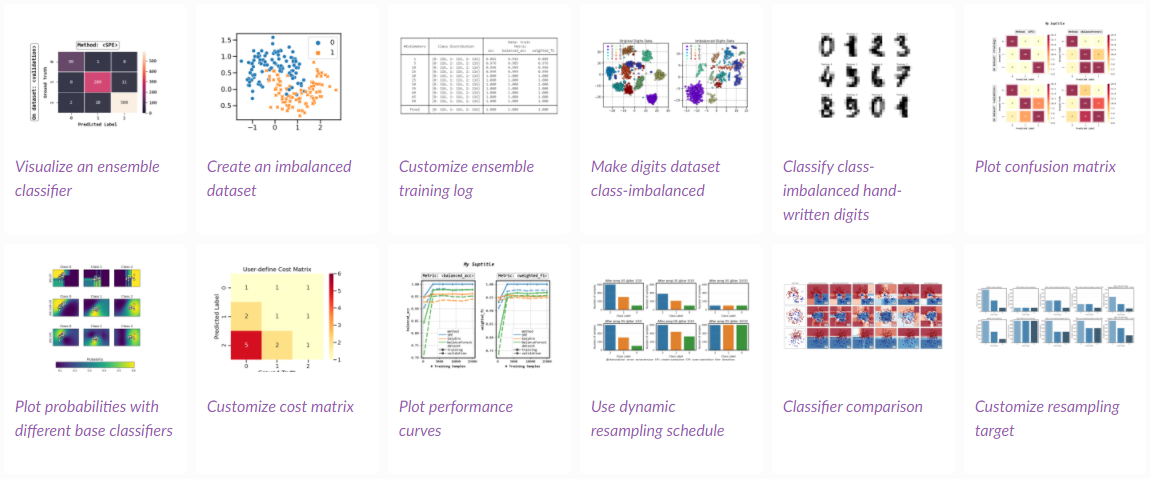
A minimal working example
Taking self-paced ensemble [1] as an example, it only requires less than 10 lines of code to deploy it:
>>> from imbalanced_ensemble.ensemble import SelfPacedEnsembleClassifier
>>> from sklearn.datasets import make_classification
>>> from sklearn.model_selection import train_test_split
>>>
>>> X, y = make_classification(n_samples=1000, n_classes=3,
...                            n_informative=4, weights=[0.2, 0.3, 0.5],
...                            random_state=0)
>>> X_train, X_test, y_train, y_test = train_test_split(
...                            X, y, test_size=0.2, random_state=42)
>>> clf = SelfPacedEnsembleClassifier(random_state=0)
>>> clf.fit(X_train, y_train)
SelfPacedEnsembleClassifier(...)
>>> clf.predict(X_test)
array([...])
Visualize ensemble classifiers
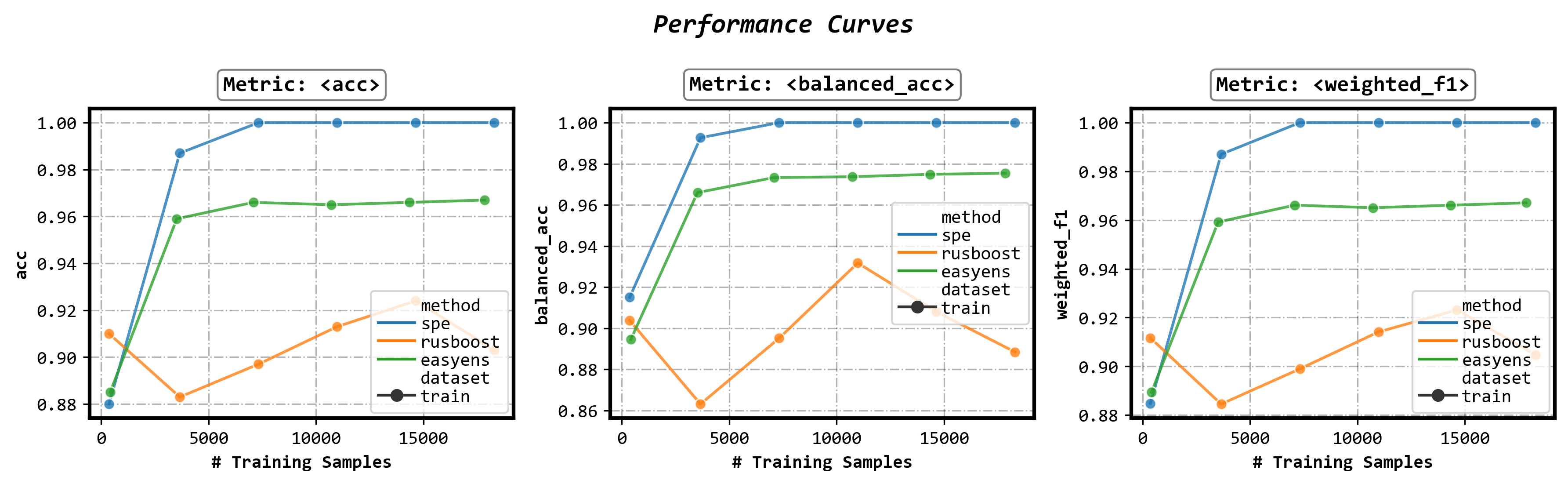
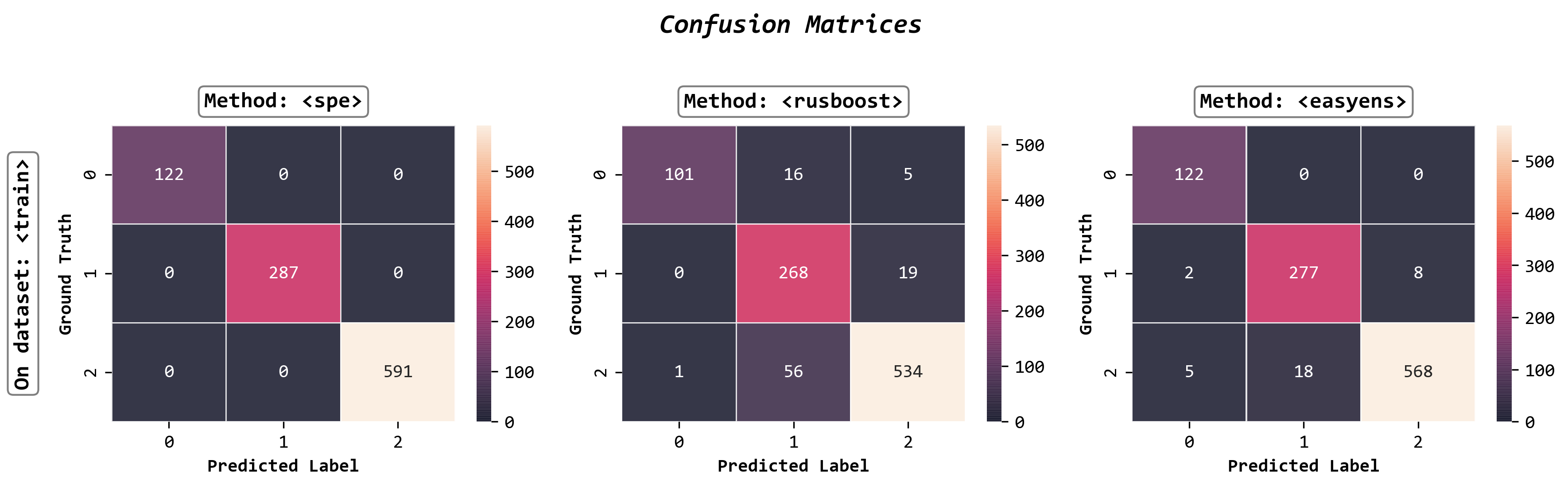
The imbalanced_ensemble.visualizer sub-module provide an ImbalancedEnsembleVisualizer. It can be used to visualize the ensemble estimator(s) for further information or comparison. Please refer to visualizer documentation and examples for more details.
Fit an ImbalancedEnsembleVisualizer
from imbalanced_ensemble.ensemble import SelfPacedEnsembleClassifier
from imbalanced_ensemble.ensemble import RUSBoostClassifier
from imbalanced_ensemble.ensemble import EasyEnsembleClassifier
from sklearn.tree import DecisionTreeClassifier

# Fit ensemble classifiers
init_kwargs = {'base_estimator': DecisionTreeClassifier()}
ensembles = {
    'spe': SelfPacedEnsembleClassifier(**init_kwargs).fit(X_train, y_train),
    'rusboost': RUSBoostClassifier(**init_kwargs).fit(X_train, y_train),
    'easyens': EasyEnsembleClassifier(**init_kwargs).fit(X_train, y_train),
}

# Fit visualizer
from imbalanced_ensemble.visualizer import ImbalancedEnsembleVisualizer
visualizer = ImbalancedEnsembleVisualizer().fit(ensembles=ensembles)
Plot performance curves
fig, axes = visualizer.performance_lineplot()
Plot confusion matrices
fig, axes = visualizer.confusion_matrix_heatmap()
Customizing training log
All ensemble classifiers in IMBENS support customizable training logging. The training log is controlled by 3 parameters eval_datasets, eval_metrics, and training_verbose of the fit() method. Read more details in the fit documentation.
Enable auto training log
clf.fit(..., train_verbose=True)
┏━━━━━━━━━━━━━┳━━━━━━━━━━━━━━━━━━━━━━━━━━┳━━━━━━━━━━━━━━━━━━━━━━━━━━━━━━━━━━━━┓
┃             ┃                          ┃            Data: train             ┃
┃ #Estimators ┃    Class Distribution    ┃               Metric               ┃
┃             ┃                          ┃  acc    balanced_acc   weighted_f1 ┃
┣━━━━━━━━━━━━━╋━━━━━━━━━━━━━━━━━━━━━━━━━━╋━━━━━━━━━━━━━━━━━━━━━━━━━━━━━━━━━━━━┫
┃      1      ┃ {0: 150, 1: 150, 2: 150} ┃ 0.838      0.877          0.839    ┃
┃      5      ┃ {0: 150, 1: 150, 2: 150} ┃ 0.924      0.949          0.924    ┃
┃     10      ┃ {0: 150, 1: 150, 2: 150} ┃ 0.954      0.970          0.954    ┃
┃     15      ┃ {0: 150, 1: 150, 2: 150} ┃ 0.979      0.986          0.979    ┃
┃     20      ┃ {0: 150, 1: 150, 2: 150} ┃ 0.990      0.993          0.990    ┃
┃     25      ┃ {0: 150, 1: 150, 2: 150} ┃ 0.994      0.996          0.994    ┃
┃     30      ┃ {0: 150, 1: 150, 2: 150} ┃ 0.988      0.992          0.988    ┃
┃     35      ┃ {0: 150, 1: 150, 2: 150} ┃ 0.999      0.999          0.999    ┃
┃     40      ┃ {0: 150, 1: 150, 2: 150} ┃ 0.995      0.997          0.995    ┃
┃     45      ┃ {0: 150, 1: 150, 2: 150} ┃ 0.995      0.997          0.995    ┃
┃     50      ┃ {0: 150, 1: 150, 2: 150} ┃ 0.993      0.995          0.993    ┃
┣━━━━━━━━━━━━━╋━━━━━━━━━━━━━━━━━━━━━━━━━━╋━━━━━━━━━━━━━━━━━━━━━━━━━━━━━━━━━━━━┫
┃    final    ┃ {0: 150, 1: 150, 2: 150} ┃ 0.993      0.995          0.993    ┃
┗━━━━━━━━━━━━━┻━━━━━━━━━━━━━━━━━━━━━━━━━━┻━━━━━━━━━━━━━━━━━━━━━━━━━━━━━━━━━━━━┛
Customize granularity and content of the training log
clf.fit(...,
        train_verbose={
            'granularity': 10,
            'print_distribution': False,
            'print_metrics': True,
        })
Click to view example output
┏━━━━━━━━━━━━━┳━━━━━━━━━━━━━━━━━━━━━━━━━━━━━━━━━━━━┓
┃             ┃            Data: train             ┃
┃ #Estimators ┃               Metric               ┃
┃             ┃  acc    balanced_acc   weighted_f1 ┃
┣━━━━━━━━━━━━━╋━━━━━━━━━━━━━━━━━━━━━━━━━━━━━━━━━━━━┫
┃      1      ┃ 0.964      0.970          0.964    ┃
┃     10      ┃ 1.000      1.000          1.000    ┃
┃     20      ┃ 1.000      1.000          1.000    ┃
┃     30      ┃ 1.000      1.000          1.000    ┃
┃     40      ┃ 1.000      1.000          1.000    ┃
┃     50      ┃ 1.000      1.000          1.000    ┃
┣━━━━━━━━━━━━━╋━━━━━━━━━━━━━━━━━━━━━━━━━━━━━━━━━━━━┫
┃    final    ┃ 1.000      1.000          1.000    ┃
┗━━━━━━━━━━━━━┻━━━━━━━━━━━━━━━━━━━━━━━━━━━━━━━━━━━━┛
Add evaluation dataset(s)
  clf.fit(...,
          eval_datasets={
              'valid': (X_valid, y_valid)
          })
Click to view example output
┏━━━━━━━━━━━━━┳━━━━━━━━━━━━━━━━━━━━━━━━━━━━━━━━━━━━┳━━━━━━━━━━━━━━━━━━━━━━━━━━━━━━━━━━━━┓
┃             ┃            Data: train             ┃            Data: valid             ┃
┃ #Estimators ┃               Metric               ┃               Metric               ┃
┃             ┃  acc    balanced_acc   weighted_f1 ┃  acc    balanced_acc   weighted_f1 ┃
┣━━━━━━━━━━━━━╋━━━━━━━━━━━━━━━━━━━━━━━━━━━━━━━━━━━━╋━━━━━━━━━━━━━━━━━━━━━━━━━━━━━━━━━━━━┫
┃      1      ┃ 0.939      0.961          0.940    ┃ 0.935      0.933          0.936    ┃
┃     10      ┃ 1.000      1.000          1.000    ┃ 0.971      0.974          0.971    ┃
┃     20      ┃ 1.000      1.000          1.000    ┃ 0.982      0.981          0.982    ┃
┃     30      ┃ 1.000      1.000          1.000    ┃ 0.983      0.983          0.983    ┃
┃     40      ┃ 1.000      1.000          1.000    ┃ 0.983      0.982          0.983    ┃
┃     50      ┃ 1.000      1.000          1.000    ┃ 0.983      0.982          0.983    ┃
┣━━━━━━━━━━━━━╋━━━━━━━━━━━━━━━━━━━━━━━━━━━━━━━━━━━━╋━━━━━━━━━━━━━━━━━━━━━━━━━━━━━━━━━━━━┫
┃    final    ┃ 1.000      1.000          1.000    ┃ 0.983      0.982          0.983    ┃
┗━━━━━━━━━━━━━┻━━━━━━━━━━━━━━━━━━━━━━━━━━━━━━━━━━━━┻━━━━━━━━━━━━━━━━━━━━━━━━━━━━━━━━━━━━┛
Customize evaluation metric(s)
from sklearn.metrics import accuracy_score, f1_score
clf.fit(...,
        eval_metrics={
            'acc': (accuracy_score, {}),
            'weighted_f1': (f1_score, {'average':'weighted'}),
        })
Click to view example output
┏━━━━━━━━━━━━━┳━━━━━━━━━━━━━━━━━━━━━━┳━━━━━━━━━━━━━━━━━━━━━━┓
┃             ┃     Data: train      ┃     Data: valid      ┃
┃ #Estimators ┃        Metric        ┃        Metric        ┃
┃             ┃  acc    weighted_f1  ┃  acc    weighted_f1  ┃
┣━━━━━━━━━━━━━╋━━━━━━━━━━━━━━━━━━━━━━╋━━━━━━━━━━━━━━━━━━━━━━┫
┃      1      ┃ 0.942      0.961     ┃ 0.919      0.936     ┃
┃     10      ┃ 1.000      1.000     ┃ 0.976      0.976     ┃
┃     20      ┃ 1.000      1.000     ┃ 0.977      0.977     ┃
┃     30      ┃ 1.000      1.000     ┃ 0.981      0.980     ┃
┃     40      ┃ 1.000      1.000     ┃ 0.980      0.979     ┃
┃     50      ┃ 1.000      1.000     ┃ 0.981      0.980     ┃
┣━━━━━━━━━━━━━╋━━━━━━━━━━━━━━━━━━━━━━╋━━━━━━━━━━━━━━━━━━━━━━┫
┃    final    ┃ 1.000      1.000     ┃ 0.981      0.980     ┃
┗━━━━━━━━━━━━━┻━━━━━━━━━━━━━━━━━━━━━━┻━━━━━━━━━━━━━━━━━━━━━━┛
About imbalanced learning
Class-imbalance (also known as the long-tail problem) is the fact that the classes are not represented equally in a classification problem, which is quite common in practice. For instance, fraud detection, prediction of rare adverse drug reactions and prediction gene families. Failure to account for the class imbalance often causes inaccurate and decreased predictive performance of many classification algorithms. Imbalanced learning aims to tackle the class imbalance problem to learn an unbiased model from imbalanced data.
For more resources on imbalanced learning, please refer to awesome-imbalanced-learning.
Acknowledgements
Many samplers and utilities are adapted from imbalanced-learn, which is an amazing project!
References
| # | Reference |
|---|---|
| [1] | Zhining Liu, Wei Cao, Zhifeng Gao, Jiang Bian, Hechang Chen, Yi Chang, and Tie-Yan Liu. 2019. Self-paced Ensemble for Highly Imbalanced Massive Data Classification. 2020 IEEE 36th International Conference on Data Engineering (ICDE). IEEE, 2020, pp. 841-852. |
| [2] | X.-Y. Liu, J. Wu, and Z.-H. Zhou, Exploratory undersampling for class-imbalance learning. IEEE Transactions on Systems, Man, and Cybernetics, Part B (Cybernetics), vol. 39, no. 2, pp. 539–550, 2009. |
| [3] | Chen, Chao, Andy Liaw, and Leo Breiman. “Using random forest to learn imbalanced data.” University of California, Berkeley 110 (2004): 1-12. |
| [4] | C. Seiffert, T. M. Khoshgoftaar, J. Van Hulse, and A. Napolitano, Rusboost: A hybrid approach to alleviating class imbalance. IEEE Transactions on Systems, Man, and Cybernetics-Part A: Systems and Humans, vol. 40, no. 1, pp. 185–197, 2010. |
| [5] | Maclin, R., & Opitz, D. (1997). An empirical evaluation of bagging and boosting. AAAI/IAAI, 1997, 546-551. |
| [6] | N. V. Chawla, A. Lazarevic, L. O. Hall, and K. W. Bowyer, Smoteboost: Improving prediction of the minority class in boosting. in European conference on principles of data mining and knowledge discovery. Springer, 2003, pp. 107–119 |
| [7] | S. Wang and X. Yao, Diversity analysis on imbalanced data sets by using ensemble models. in 2009 IEEE Symposium on Computational Intelligence and Data Mining. IEEE, 2009, pp. 324–331. |
| [8] | Fan, W., Stolfo, S. J., Zhang, J., & Chan, P. K. (1999, June). AdaCost: misclassification cost-sensitive boosting. In Icml (Vol. 99, pp. 97-105). |
| [9] | Shawe-Taylor, G. K. J., & Karakoulas, G. (1999). Optimizing classifiers for imbalanced training sets. Advances in neural information processing systems, 11(11), 253. |
| [10] | Viola, P., & Jones, M. (2001). Fast and robust classification using asymmetric adaboost and a detector cascade. Advances in Neural Information Processing System, 14. |
| [11] | Freund, Y., & Schapire, R. E. (1997). A decision-theoretic generalization of on-line learning and an application to boosting. Journal of computer and system sciences, 55(1), 119-139. |
| [12] | Breiman, L. (1996). Bagging predictors. Machine learning, 24(2), 123-140. |
| [13] | Guillaume Lemaître, Fernando Nogueira, and Christos K. Aridas. Imbalanced-learn: A python toolbox to tackle the curse of imbalanced datasets in machine learning. Journal of Machine Learning Research, 18(17):1–5, 2017. |
Related Projects
Check out Zhining's other open-source projects!
 Self-paced Ensemble [ICDE]  |
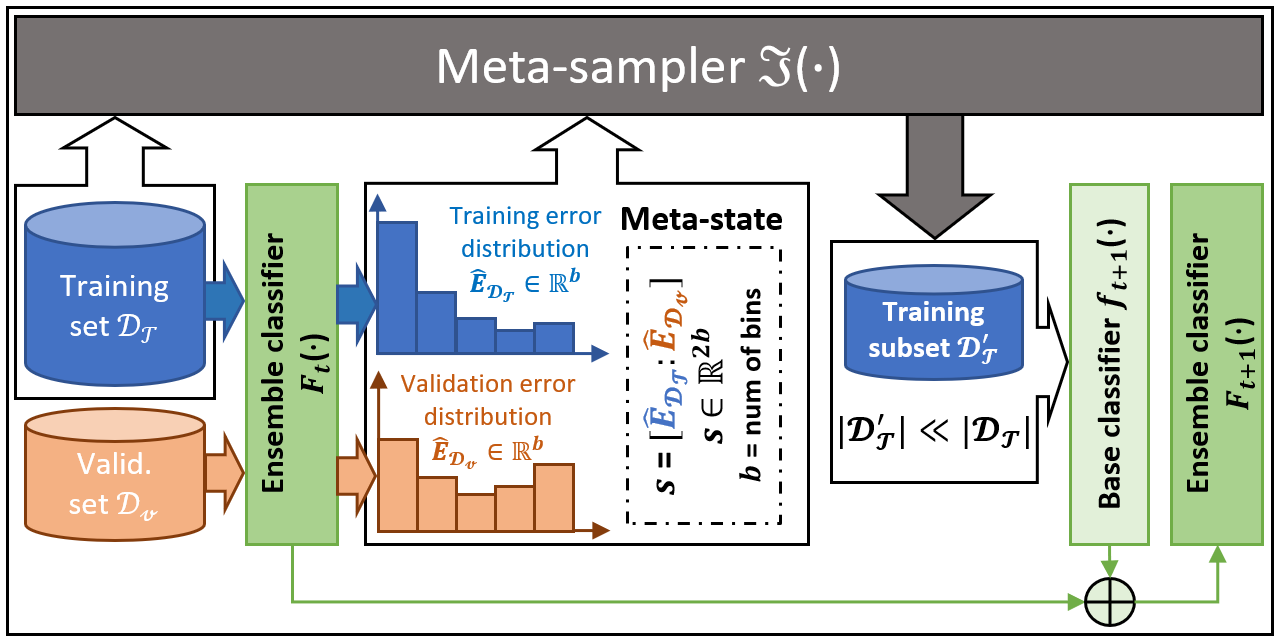 Meta-Sampler [NeurIPS]  |
 Imbalanced Learning [Awesome]  |
 Machine Learning [Awesome]  |
Contributors
✨
Thanks goes to these wonderful people (emoji key):
 Zhining Liu |
 leaphan |
 hannanhtang |
 H.J.Ren |
This project follows the all-contributors specification. Contributions of any kind welcome!
 2 Dec 14, 2021

 32 Jun 23, 2022
 1 Feb 6, 2022

 8.9k Jan 9, 2023
 84 Nov 25, 2022
 2 Aug 23, 2022
 366 Jan 3, 2023
 152 Jan 7, 2023

 3k Jan 8, 2023


 511 Dec 20, 2022
 407 Dec 12, 2022
 1 Feb 06, 2022
 1 Feb 02, 2022
 22 Dec 15, 2022
 14 Jan 05, 2023
 43 Dec 03, 2021
 354 Dec 31, 2022
 858 Dec 25, 2022
 31 Nov 17, 2022
 1 Jan 11, 2022
 1.3k Dec 28, 2022
 1.3k Dec 22, 2022
 2 Dec 10, 2021
 1 Dec 29, 2021
 250 Jan 07, 2023
 1 Feb 01, 2022
 11.1k Jan 03, 2023
 3.8k Jan 09, 2023